UltraPulse CO₂ Laser Bangkok
Doctor-assessed, focused CO₂ laser treatment for selected benign skin lesions including skin tags, suitable moles and beauty marks, seborrheic keratoses, certain warts, milia and other appropriate superficial growths. BAC uses an UltraPulse CO₂ platform with adjustable CW and UltraPulse energy modes, allowing the doctor to tailor energy delivery, treatment depth and technique to each lesion rather than using one setting for every spot.
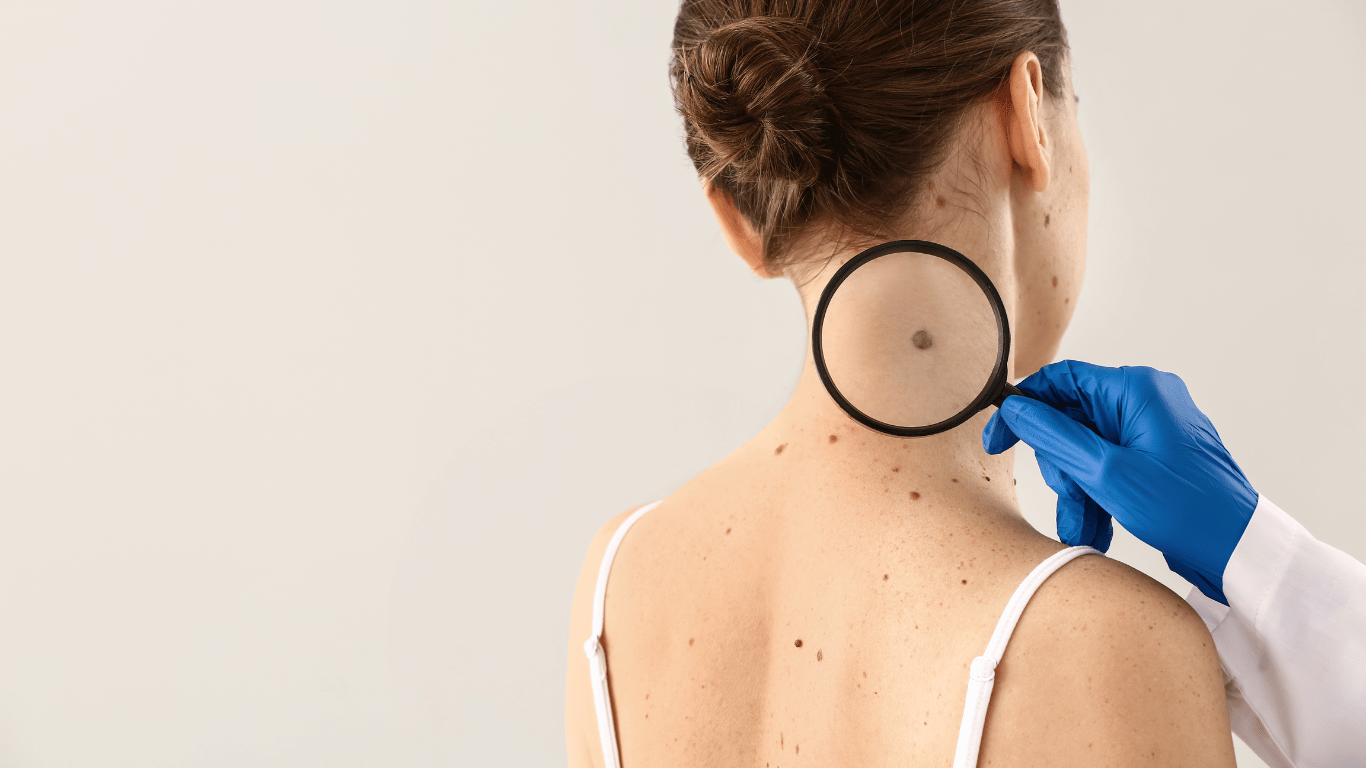
What is UltraPulse CO₂ laser used for at BAC Clinic?
At BAC (Bangkok Aesthetic Clinic), focused UltraPulse CO₂ laser is used for doctor-selected skin-lesion procedures in which unwanted tissue needs to be precisely ablated, vaporised or cut. The practical objective is simple: treat the lesion itself as accurately as possible while avoiding unnecessary treatment of normal surrounding skin.
Skin Tags
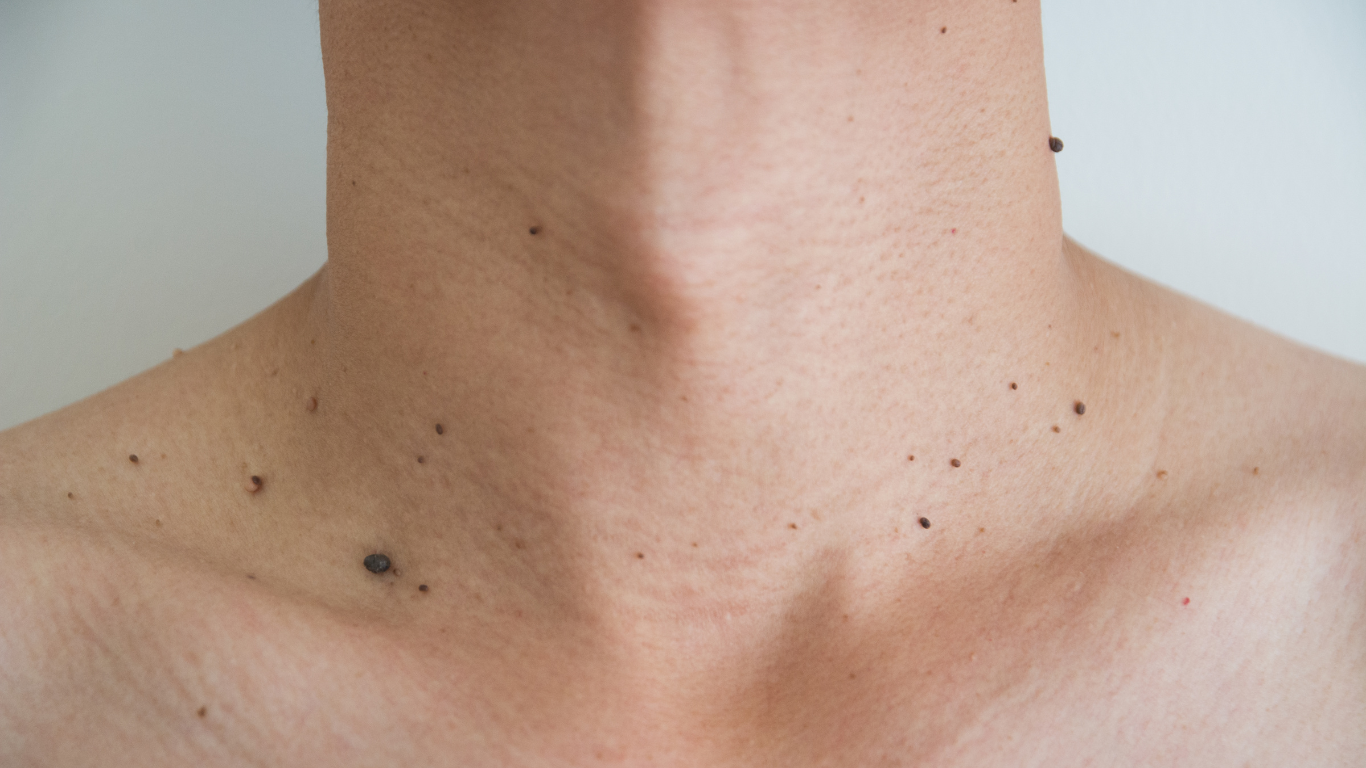
Small, soft skin tags commonly occur on the neck, underarms, body folds and areas exposed to friction. Suitable tags may be removed one by one with focused CO₂ laser after the doctor confirms that the lesion is consistent with a benign skin tag.
Read the BAC Skin Tag Removal Guide →Moles & Beauty Marks
Selected small moles and beauty marks that appear clinically suitable may be considered for CO₂ laser. Pigmented lesions should never be treated merely because they are small; changing, irregular or otherwise suspicious lesions require appropriate medical assessment rather than automatic cosmetic destruction.
Read the BAC Mole Removal Guide →Other Suitable Lesions
Depending on the diagnosis and location, the doctor may consider CO₂ laser for seborrheic keratoses, certain warts, milia, selected sebaceous-hyperplasia lesions and some other superficial benign growths. Suitability is determined lesion by lesion.
Explore the Full BAC CO₂ Laser Guide →Complete UltraPulse CO₂ Laser Guide
What is a CO₂ laser?
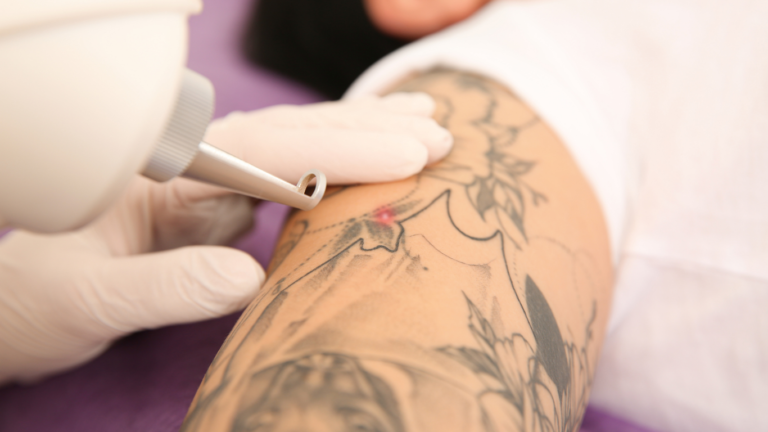
A carbon-dioxide or CO₂ laser is an ablative medical laser that emits light at approximately 10,600 nanometres. At this wavelength, energy is strongly absorbed by water. Because skin tissue contains a large amount of water, appropriately delivered CO₂ energy can heat and vaporise very small volumes of tissue. In a focused lesion-removal procedure, this property allows a doctor to remove selected tissue progressively rather than treating a broad area indiscriminately.
The word ablative is important. Unlike a non-ablative treatment that aims to heat tissue without creating an open wound, focused CO₂ lesion removal intentionally removes tissue. The treatment site therefore becomes a controlled wound that needs time to re-epithelialise. This is why proper wound care, sun protection after healing, and realistic expectations about redness, scabbing, pigmentation and texture are essential parts of the procedure.
CW and UltraPulse: why adjustable energy delivery matters
BAC uses an UltraPulse CO₂ laser platform with both CW (continuous-wave) and UltraPulse modes. These are not simply marketing labels. They describe different ways in which CO₂ energy can be delivered to tissue. The doctor can select the mode and settings according to the lesion’s shape, base, thickness, location and intended treatment depth.
Continuous-wave delivery provides a continuous stream of CO₂ energy while the laser is activated. In appropriate settings, it can be useful when the doctor wants controlled cutting, vaporisation or coagulation over a selected path. The specific parameters still need to be adapted to the lesion; “continuous” does not mean that all lesions should receive the same exposure.
UltraPulse delivery uses short, high-energy pulses. The clinical purpose is to provide the doctor with another way to ablate tissue while controlling pulse duration and energy delivery. For small lesions, careful pulsed treatment can help keep the procedure highly localised. The cosmetic outcome, however, still depends on lesion depth, technique, individual healing and aftercare—not on the machine name alone.
What BAC means by “precision”
Precision does not mean that a laser can magically remove every lesion without leaving any mark. It means the doctor can work on a small target, choose the treatment endpoint progressively, and avoid making the treatment field larger than necessary. When a lesion is deep, the wound may still be deep. When the lesion is broad, the wound may still be broad. A precise treatment should respect the real anatomy of the lesion rather than promise an unrealistically invisible procedure.
What can focused UltraPulse CO₂ laser remove?
The correct question is not “Can CO₂ laser burn this spot?” Almost any tissue can be injured by enough energy. The clinically useful question is whether a particular lesion is appropriate for focused CO₂ treatment and whether laser removal offers a sensible balance between removal, wound size, recurrence risk and cosmetic outcome.
Skin Tags (Acrochordons)
Skin tags are soft, benign growths that often develop in areas of friction such as the neck, underarms, under the breasts, groin folds and other body folds. Some are attached by a narrow stalk while others have a broader base. Small tags may be quick to treat, but broad, thick or periocular lesions need more careful planning.
Benign Moles
Some small superficial or raised moles may be considered for CO₂ laser when their appearance is clinically suitable. A mole may recur if deeper cells remain. Treating increasingly deep solely to pursue “one-time permanent removal” can increase tissue injury, so treatment depth must be balanced against scar and texture risk.
Beauty Marks
“Beauty mark” is a cosmetic term rather than a diagnosis. A small dark spot may be a mole, lentigo, seborrheic keratosis or another pigmented lesion. The doctor checks the spot before deciding whether CO₂ laser is appropriate or whether another type of assessment or laser is more suitable.
Seborrheic Keratoses
Seborrheic keratoses are benign growths that may look waxy, rough, raised or “stuck on.” Depending on thickness, location and diagnosis, focused CO₂ ablation may be considered. Patients often call these lesions “moles,” which is one reason in-person assessment is useful before choosing treatment.
Warts
Certain warts may be treated with CO₂ laser. Because warts are related to viral infection, recurrence is possible even after the visible lesion is removed. The choice of treatment depends on type, location, size, previous treatment and whether the diagnosis is clear.
Milia & Selected Superficial Bumps
Milia are small keratin-filled cysts that can resemble whiteheads. Selected lesions may be opened or removed with a focused technique when appropriate. Ordinary comedonal acne, however, is usually approached differently; BAC first differentiates acne from milia, sebaceous hyperplasia and other small facial lesions.
Areas that may be treated
Depending on the lesion and safety considerations, treatment may be considered on the face, neck, chest, back, trunk, underarms and selected body areas. Lesions around the eye require additional caution because the tissue is thin and the eye itself must be protected. BAC may decline a lesion when its location is not suitable for treatment at the clinic.
Why BAC checks the lesion before switching on the laser
A raised brown spot is not automatically a mole. A soft protruding bump is not automatically a skin tag. A rough papule is not automatically a wart. A white facial bump is not automatically acne. Many skin lesions share colours and shapes, especially in photographs taken with a phone. Correct classification changes the treatment plan.
At BAC, photographs can be useful when you contact the admin team because they help us understand the approximate number, location and size of the spots. They may also help allocate enough appointment time. Photographs do not replace the final in-person assessment. Texture, firmness, border, depth, attachment to the skin and subtle colour differences can be difficult to judge from a photo.
If the doctor is not comfortable that a pigmented lesion is suitable for cosmetic laser removal, the appropriate decision may be to postpone CO₂ treatment and recommend additional medical evaluation. This is particularly important when a lesion has changed recently.
Tell the doctor if a lesion:
- has recently changed in size, shape, border or colour
- has several different colours within the same spot
- bleeds repeatedly without a clear reason
- forms a sore that does not heal normally
- has become persistently painful, itchy or irritated
- looks very different from your other moles or spots
- has returned with a noticeably different appearance
- was previously biopsied or treated elsewhere
CO₂ laser vs pigment laser, cryotherapy and surgical excision
Different tools solve different problems. A patient may search for “mole laser,” but the best technique cannot be selected from the search term alone. The lesion’s structure matters. The table below is a practical overview rather than a rule for self-diagnosis.
| Approach | Main Principle | Often Considered For | Important Limitation |
|---|---|---|---|
| Focused CO₂ laser | Ablates or vaporises selected tissue using 10,600 nm energy absorbed by water. | Selected raised or superficial benign lesions, depending on diagnosis. | Creates a wound; pigmentation, texture change, recurrence and scarring are possible. |
| Pigment-targeting laser | Targets pigment chromophores rather than physically ablating a raised mass. | Some flat pigment concerns, depending on diagnosis and wavelength. | Not interchangeable with CO₂ for every raised lesion or skin growth. |
| Cryotherapy | Freezes tissue to produce controlled destruction. | Certain benign lesions or warts in appropriate cases. | Depth can be harder to judge visually; colour change can occur. |
| Surgical excision | Physically removes the lesion with a blade and may require sutures. | Deeper lesions, lesions requiring complete excision, or lesions needing pathology. | Usually creates a linear surgical wound; technique and scar depend on lesion and site. |
The appropriate method should be selected after examination. This table is general information and does not diagnose any individual lesion.
What does the skin look like before and immediately after focused CO₂ removal?
Immediate post-treatment photos are useful for understanding the procedure, but they are not final-result photos. A treated site may look pink, raw, pale, crusted or temporarily depressed. The appearance changes as the surface closes and tissue remodels.
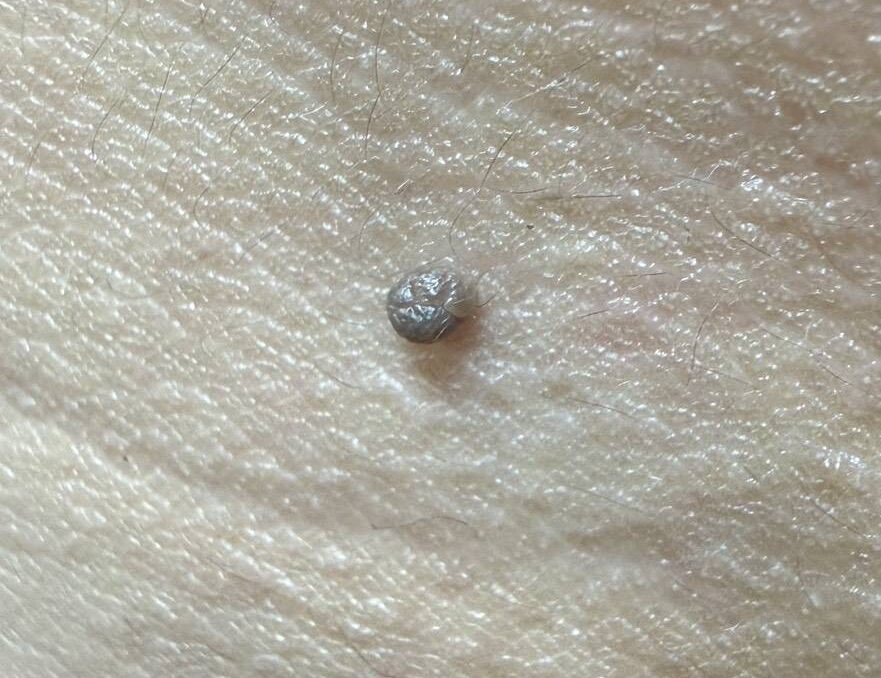 BEFORE
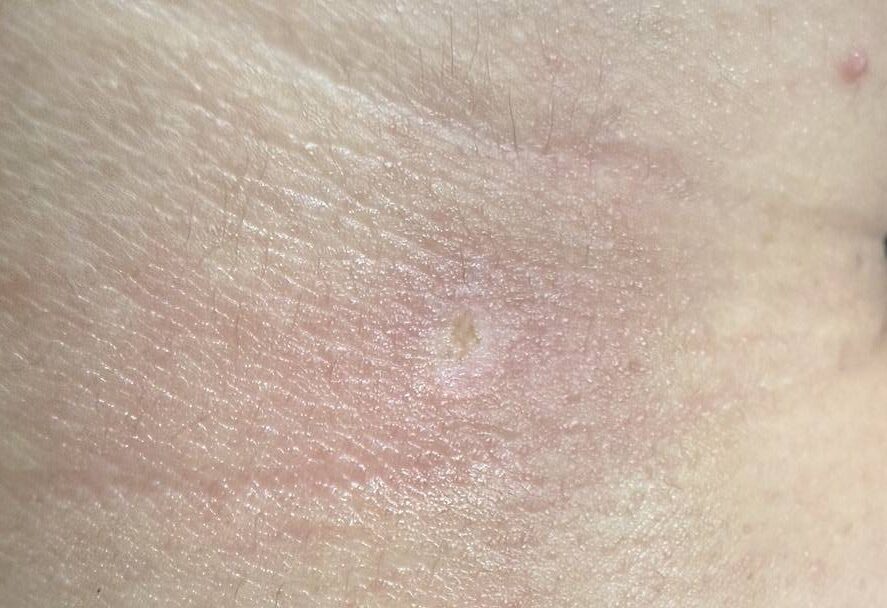 IMMEDIATELY AFTER
BAC clinical case: raised benign-appearing lesion
This pair demonstrates why the treatment site can appear more visible immediately after ablation. The lesion occupied physical tissue above and within the skin. Once that tissue is removed, the treated area may initially look slightly depressed. New surface skin then forms during healing, while colour and texture continue to mature over the following weeks and months.
Clinical images are shown for educational purposes. Individual lesions, treatment depth, healing time and cosmetic outcomes vary.
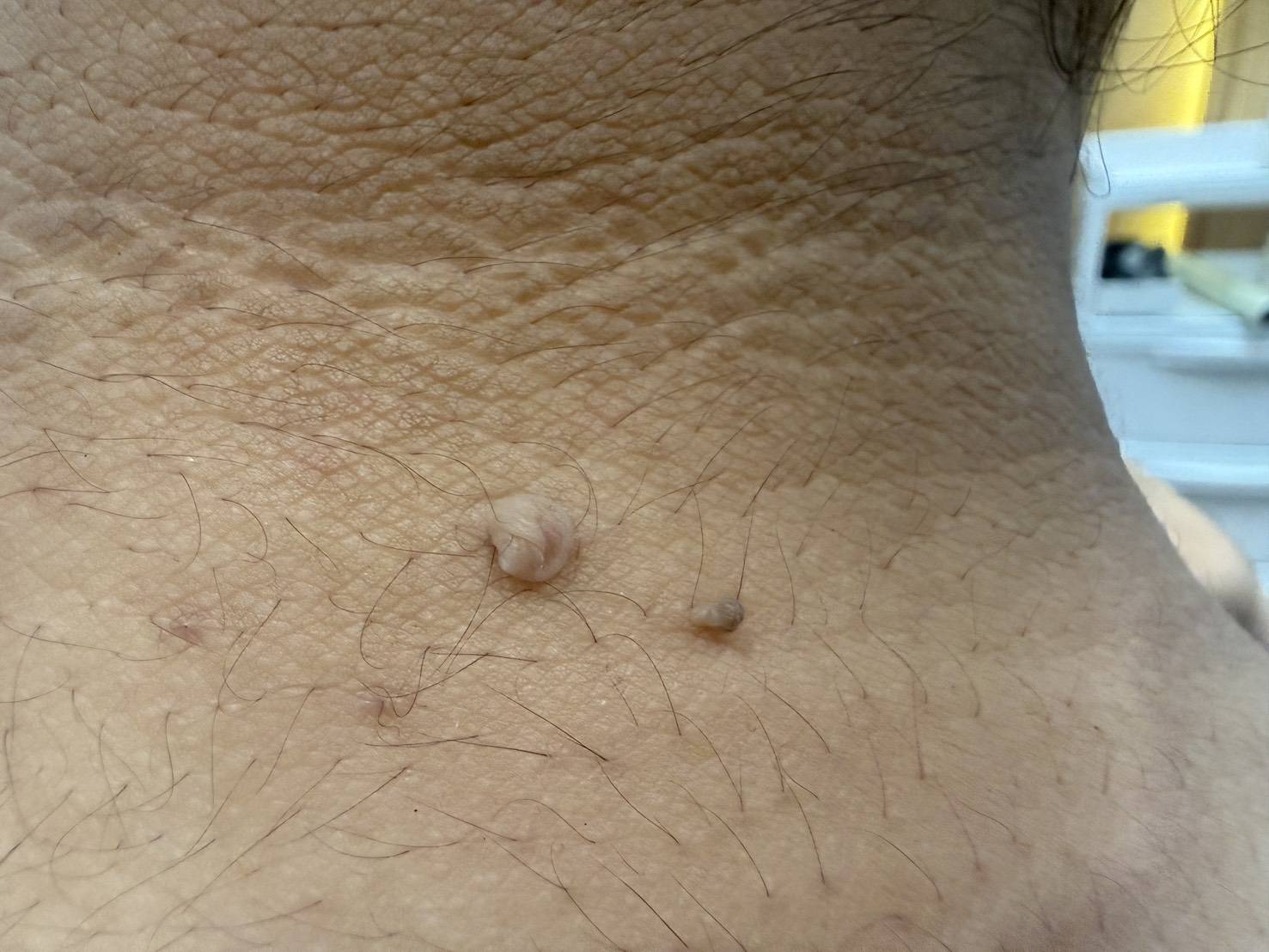 BEFORE
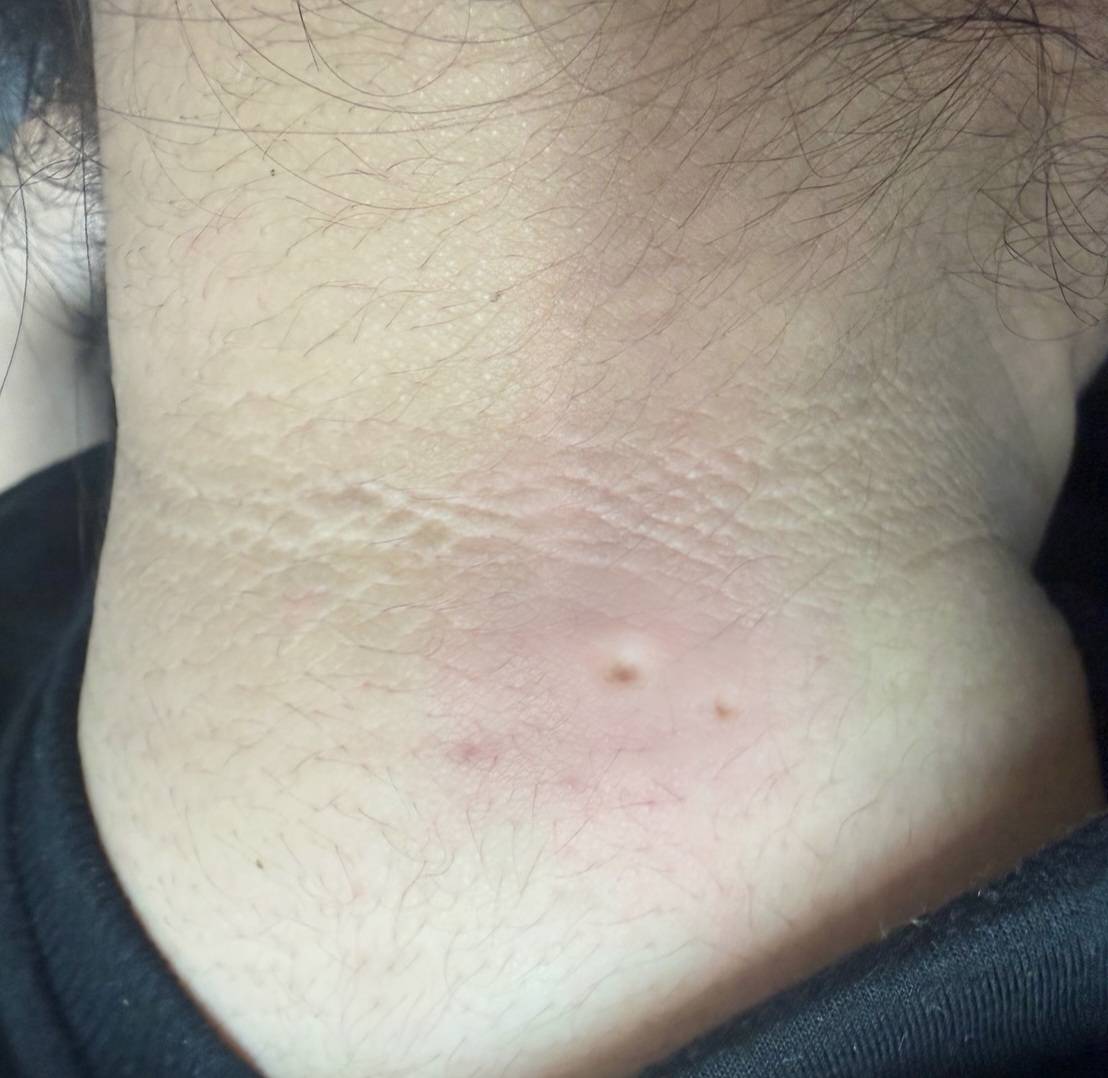 IMMEDIATELY AFTER
BAC clinical case: neck skin tags
Skin tags can have different bases even when they are close together. The doctor treats each lesion individually. Immediately afterward, a small pink treatment site or pinpoint depression may be visible. The early appearance should not be judged as the finished cosmetic result.
Photos are not a guarantee of the result for another patient. Final appearance depends on lesion size, base, location, skin response, aftercare and individual wound healing.
What happens during UltraPulse CO₂ laser treatment at BAC Clinic?
The exact appointment varies with the number and complexity of lesions, but the clinic follows a straightforward sequence: examine first, agree on the plan, numb when appropriate, treat the selected lesions, then provide wound-care instructions.
Doctor assessment
The doctor examines the lesions you would like treated and considers their appearance, colour, surface, size, depth, location and history. The first decision is whether CO₂ laser is appropriate at all. Lesions that do not look suitable for cosmetic laser may be deferred.
Treatment plan and quotation
The clinic confirms which lesions are included, how pricing is calculated and whether the expected wound is superficial or deeper. This is the right time to discuss concerns about a previous scar, pigmentation, a tendency to form keloids, upcoming travel, swimming, exercise or an important event.
Skin preparation and numbing
The area is cleaned. Depending on lesion size, base, location and number, the doctor may use topical anaesthetic, local anaesthetic injection or another appropriate numbing approach. Smaller lesions may require only brief preparation, while larger or deeper treatment may need additional time for anaesthesia.
Focused CO₂ laser removal
The doctor treats the selected lesions individually. Energy mode, power, pulse characteristics and technique are adjusted according to the treatment goal. Tissue may be removed layer by layer or cut at the lesion base as appropriate. The doctor reassesses the endpoint during the procedure rather than relying on a fixed number of laser passes.
Immediate wound care
Medication or ointment may be applied, and a dressing may be used depending on the site and wound depth. You receive instructions about keeping the area dry, changing the dressing, cleanser, makeup, exercise, swimming and sun exposure. Individual instructions given on the treatment day take priority over general online advice.
Follow-up when needed
Many small lesions heal without a routine in-clinic follow-up, but you can contact BAC if you are concerned about pain, redness, discharge, bleeding, delayed healing or recurrence. Moles and beauty marks that reappear should be reassessed rather than repeatedly self-treating the spot.
Can consultation and treatment be done on the same day?
Yes, when the doctor considers the lesion suitable for CO₂ laser and sufficient treatment time is available. This is useful for visitors who are in Bangkok for a limited period. If you have many lesions, very large lesions or spots in sensitive locations, tell the admin team in advance so an appropriate appointment duration can be considered.
Healing after focused CO₂ lesion removal
Recovery is not identical for every patient. A tiny skin tag removed from a superficial base may create a very small wound, while a deeper raised mole or thick seborrheic keratosis may leave a larger treatment site. The body area also matters: facial skin can heal differently from areas exposed to friction, sweat or tension.
The site may look red, pink, raw, pale or slightly depressed. Mild tenderness is possible. This is the immediate treatment appearance, not the final result.
Early wound healing begins. A crust or scab may form. Small wounds are generally kept dry according to BAC’s individual instructions.
New surface skin develops. Small wounds may close earlier; deeper areas can take longer. Do not remove the crust manually even if the edges begin to lift.
Pinkness, temporary darkening or texture can continue to mature after the wound has closed. Sun protection becomes important once the skin is sufficiently healed.
Why can a mole-removal site look like a small “hole”?
A raised lesion can extend both above and below the surrounding skin surface. When the visible lesion and appropriate underlying tissue are removed, the site can temporarily appear depressed. This does not mean the early appearance is permanent. Re-epithelialisation closes the surface, and tissue remodelling continues afterward. However, deeper removal carries a greater possibility of long-term textural change, which is why the doctor balances removal depth with scar risk.
How fast is recovery?
For small focused lesions, the wound area is often limited and many patients can continue normal desk work or daily activities while caring for the spot. “Fast recovery” should not be interpreted as “no wound.” Because CO₂ laser is ablative, the treated area needs time to close. Visible crusting or pinkness may remain even when you feel physically well. Larger, deeper or multiple lesions can require more careful dressing and longer recovery.
How to care for the skin after CO₂ laser removal
Aftercare should match wound depth. BAC therefore separates general guidance for small superficial wounds from deeper or larger treatment sites. The doctor’s instructions for your individual wound always take priority.
Small / superficial wound
- Keep the treated site dry for approximately the first 3 days, unless instructed otherwise.
- Clean water may generally contact the area from around day 4.
- Gentle facial cleanser or soap may generally resume around day 7.
- Keep any dressing clean and change it as instructed.
- Allow the crust or scab to detach naturally.
- Do not scratch, peel or intentionally remove the scab.
Larger / deeper wound
- The area may need to remain dry for approximately 7 days.
- Clean water may generally resume from around day 8.
- Gentle cleanser or soap may generally resume around day 10.
- Apply medication or ointment according to the clinic’s instructions.
- Replace dressings if wet, dirty or loose, or according to the schedule given.
- Contact the clinic if healing appears unusual or progressively worse.
Makeup
Do not apply makeup directly over an open, wet or crusted wound. Makeup can introduce friction, pigments, preservatives and microorganisms to healing skin. Resume only when the surface has healed sufficiently and the doctor’s instructions allow it. You can often use makeup around the untreated skin while carefully avoiding the wound.
Exercise, sweating, sauna and swimming
Heavy exercise, sauna and activities that produce significant sweating may irritate a fresh wound, particularly on the neck, chest, underarms and body folds. BAC generally advises temporary avoidance during early healing according to wound size and location. Swimming pools, hot tubs, seawater and natural bodies of water should be avoided while the wound is open because prolonged moisture and environmental exposure can interfere with wound care.
Skincare, retinoids and exfoliating acids
Do not apply retinoids, AHA/BHA acids, scrubs, strong vitamin C preparations or other potentially irritating active products directly onto an open treatment site. Resume active skincare only after the area has healed sufficiently. If you are unsure, ask BAC before restarting the product on the treated spot.
Sun protection
Strong sun exposure can make post-inflammatory pigmentation more noticeable. Do not rub sunscreen into an open wound; use physical avoidance such as shade and appropriate clothing when possible. Once the surface has healed sufficiently, appropriate sun protection becomes an important part of reducing additional darkening while the colour continues to mature.
Will CO₂ laser leave a scar, dark mark or recurrence?
Any procedure that removes tissue and creates a wound can potentially leave a visible mark. The risk is not determined by the laser machine alone. Lesion depth, body location, skin type, infection, wound tension, picking, sun exposure, individual scar biology and the amount of tissue that must be removed all influence the result.
Redness / Pinkness
New skin frequently appears pink or red after the surface closes. This can gradually settle over time. A deeper treatment site may remain visibly pink longer than a tiny superficial wound.
Post-inflammatory Pigmentation
Temporary darker colour can occur during healing, particularly in skin that readily produces pigment after inflammation. Picking and sun exposure can make the mark more noticeable.
Textural Change / Scar
A small depressed or raised textural change is possible, especially when the original lesion is deep or when healing is complicated. No responsible clinic can guarantee absolutely scar-free removal for every patient.
Can a mole grow back?
Yes. A mole can recur if deeper mole cells remain. The answer is not always to treat as deeply as possible in the first session, because unnecessary depth may increase scar risk. The doctor balances adequate removal with preservation of normal tissue. If a mole reappears, it should be reassessed before additional treatment.
Can a skin tag grow back?
A completely removed individual skin tag does not necessarily grow back from exactly the same tissue, but people who are prone to skin tags may develop new lesions nearby. New tags in the same neck or underarm area do not automatically mean that the previous treatment failed.
Can a wart return?
Yes. Removing the visible wart does not guarantee that viral activity will never produce another lesion. Recurrence can happen, and some warts need repeated treatment or a different management strategy.
CO₂ laser mole and skin tag removal prices at BAC Clinic
Price depends on lesion type, size, depth, number and location. The doctor confirms suitability, and the clinic confirms the treatment price before proceeding. The figures below are reference prices for the categories shown and may not apply to every lesion.
Small skin tag removal
Reference starting price for the first small lesion. Selected additional small skin tags may be priced from ฿390 each, where applicable.
Large, broad-based, deep, difficult or periocular lesions are assessed individually.
View the current Skin Tag Removal page →Mole removal reference price
First mole up to 2 mm. Current BAC reference pricing lists the second mole onward at ฿990 per lesion up to 2 mm, with larger lesions priced according to size and assessment.
Around-eye lesions and clinically complex lesions may have separate pricing.
View the current Mole Removal page →Planning CO₂ laser treatment while travelling in Bangkok
BAC regularly communicates with international patients in English. The clinic is in Sukhumvit 16, a central area accessible from MRT Queen Sirikit National Convention Centre and BTS Asok. If the doctor considers your lesion suitable and enough time is reserved, consultation and treatment can often be completed during the same visit.
The more important travel question is not whether you can walk out of the clinic—it is whether your itinerary allows you to care for an open wound correctly. Bangkok’s heat, sweating, strong sun and travel activities can make aftercare more demanding. A small treatment does not usually prevent ordinary sightseeing, but swimming, diving, beach trips, intense exercise, sauna and heavy sun exposure can conflict with wound-care instructions.
Before a beach trip
If your itinerary includes swimming, island travel or long hours in direct sun, consider doing CO₂ removal after that portion of the trip rather than immediately before it.
Before a flight
Flying after a small focused procedure is often practical, but you still need to carry any prescribed wound-care supplies and follow instructions during the journey. Discuss very large treatment areas or complicated wounds with the doctor.
Before an important event
Do not schedule treatment too close to a wedding, photoshoot or presentation if visible crusting or redness would be a concern. Healing time varies and cannot be guaranteed to fit a specific cosmetic deadline.
A focused, doctor-assessed approach to CO₂ lesion removal
Assessment before ablation
BAC does not treat every brown or raised spot as the same diagnosis. The doctor examines each lesion and decides whether CO₂ laser is appropriate before proceeding.
Adjustable CW + UltraPulse modes
The platform allows different patterns of CO₂ energy delivery. The doctor can select technique and settings according to the lesion instead of applying one fixed setting to every patient.
Clear aftercare
Because CO₂ lesion removal creates a controlled wound, BAC places strong emphasis on wound dryness, dressing care, cleansing, scab protection and sun precautions after the surface heals.
English communication
English-language appointment support is available, and international patients can discuss the procedure, recovery and aftercare before making a decision.
Central Bangkok location
BAC is located on Sukhumvit Soi 16, convenient for Asok, Queen Sirikit National Convention Centre, Sukhumvit Road and central Bangkok hotels.
Same-day treatment when appropriate
You may consult and proceed on the same visit when the doctor confirms suitability and there is sufficient treatment time. Treatment is never automatic simply because an appointment was booked.
Read more before your appointment
If you prefer to research the exact type of lesion or aftercare before booking, the following BAC Clinic pages provide more focused information.
UltraPulse CO₂ Laser Bangkok FAQ
What is UltraPulse CO₂ laser?
What is the difference between CW and UltraPulse mode?
Can CO₂ laser remove skin tags?
Can CO₂ laser remove moles?
Can CO₂ laser remove beauty marks?
Can CO₂ laser treat seborrheic keratoses?
Can CO₂ laser remove warts?
Can CO₂ laser treat clogged pores or closed comedones?
Does CO₂ laser hurt?
How long does a CO₂ laser appointment take?
Can I consult and do the laser on the same day?
Can I send a photo before booking?
How long should the wound stay dry?
When can I wash my face after CO₂ laser?
Can I wear makeup after mole or skin tag removal?
Can I exercise after CO₂ laser?
Can I swim after CO₂ laser?
Will CO₂ laser leave a scar?
Why does the area look depressed immediately after mole removal?
Can a mole return after laser removal?
How much does skin tag removal cost at BAC?
How much does mole removal cost at BAC?
Where is BAC Clinic?
How do I book UltraPulse CO₂ laser at BAC Clinic?
Have a mole, skin tag or raised skin lesion you want assessed?
Send BAC a clear photo and tell us where the lesion is located, approximately how many spots you have, and when you would like to visit. Photos help us plan your appointment; the doctor will confirm diagnosis, suitability, treatment depth and final price in person.
Medical information on this page is for general education and does not replace an in-person assessment. Treatment is offered only when the doctor considers the lesion suitable. Results, healing time, pigmentation, recurrence and scarring vary between individuals.