
Restore Stronger, Healthier Hair with Evidence-Based Regenerative Medicine
Hair thinning doesn’t happen overnight. By the time you notice a widening part, excessive shedding, or a receding hairline, your hair follicles may have been weakening for years.
While shampoos, supplements, and hair tonics may improve the appearance of your hair, they rarely address the underlying biological changes responsible for progressive hair loss. This is why many patients today are looking beyond cosmetic solutions and choosing treatments that focus on restoring follicle health.
At BAC (Bangkok Aesthetics Clinic), we offer Platelet-Rich Plasma (PRP) Hair Therapy, an advanced, non-surgical treatment that uses your body’s own regenerative potential to support healthier, stronger hair growth.
Unlike treatments that rely solely on medication, PRP utilizes concentrated platelets rich in natural growth factors to stimulate weakened hair follicles, improve scalp circulation, and create a healthier environment for hair growth. The procedure requires only a small sample of your own blood, making it one of the safest regenerative treatments available with virtually no risk of allergic reaction.
Today, PRP is widely used by dermatologists, hair restoration physicians, and aesthetic specialists around the world. It has been evaluated in numerous clinical trials, randomized controlled studies, systematic reviews, and meta-analyses investigating its role in treating androgenetic alopecia (male and female pattern hair loss). Overall, the evidence suggests that PRP can improve hair density, increase hair thickness, and reduce hair shedding in appropriately selected patients when performed using standardized medical protocols.
However, successful treatment depends on much more than simply injecting PRP.
The quality of platelet preparation, physician experience, patient selection, and accurate diagnosis all play a critical role in achieving optimal results.
That’s why every PRP treatment at BAC (Bangkok Aesthetics Clinic) begins with a comprehensive medical consultation. Our physicians evaluate the underlying cause of hair loss, assess the condition of your scalp and hair follicles, and develop a personalized treatment plan based on current scientific evidence—not a one-size-fits-all approach.
Whether you are noticing early signs of thinning, looking to preserve existing hair, or hoping to enhance the results of other hair restoration treatments, PRP may be an effective option to help slow the progression of hair loss and support stronger, healthier hair naturally.
Why Choose PRP Hair Therapy?
PRP has become one of the fastest-growing regenerative treatments in hair restoration because it works differently from conventional hair loss therapies.
Instead of masking symptoms or relying on synthetic ingredients, PRP supports the body’s own healing mechanisms.
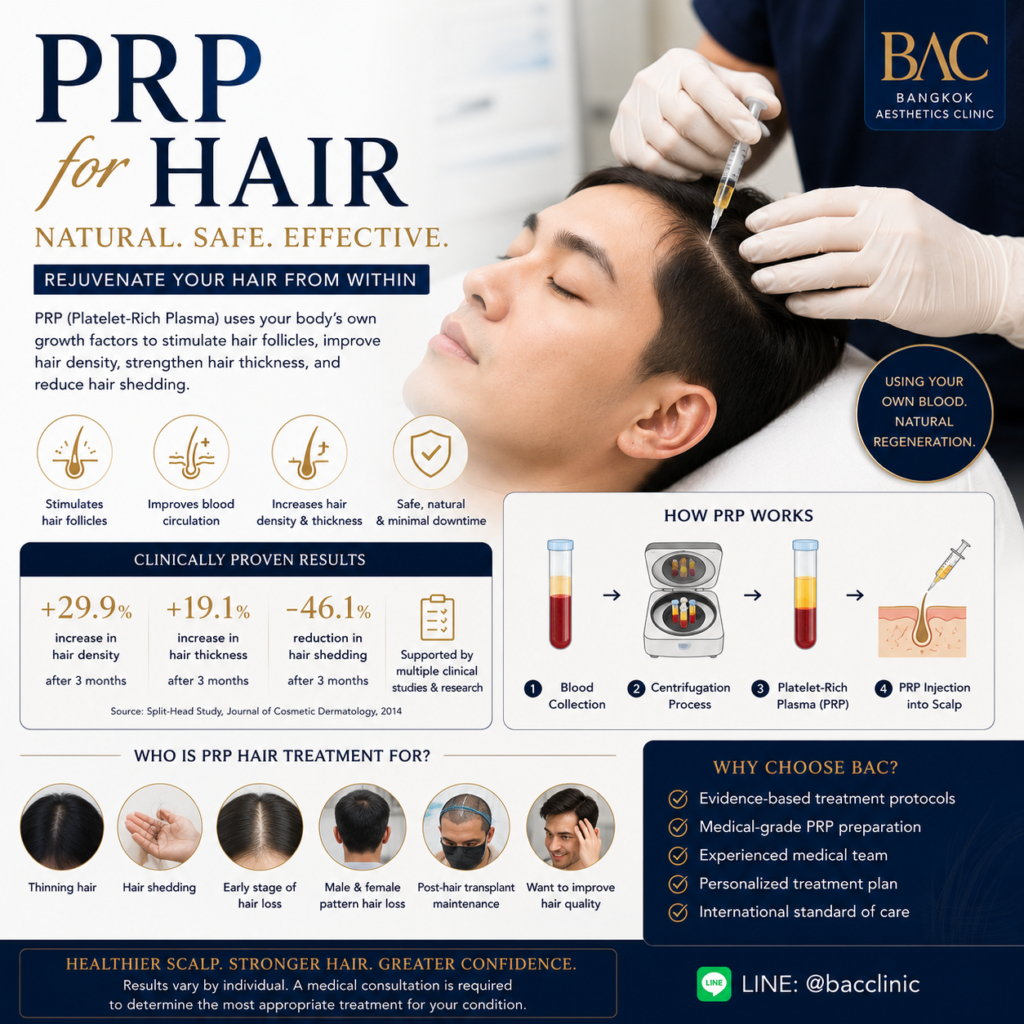
After a small blood sample is collected, it is processed using a medical centrifuge to separate and concentrate platelets. These platelets contain powerful growth factors that are naturally involved in tissue repair, blood vessel formation, cellular regeneration, and wound healing.
When injected into areas affected by hair thinning, these growth factors help stimulate weakened follicles, improve blood supply to the scalp, reduce microscopic inflammation, and encourage healthier hair growth over time.
For many patients, PRP offers several important advantages:
- Uses your own blood with minimal risk of allergic reactions
- Non-surgical with little to no downtime
- Supports healthier, thicker-looking hair
- Helps reduce ongoing hair shedding
- Suitable for both men and women with early to moderate hair thinning
- Can be combined with other evidence-based hair restoration treatments when appropriate
Rather than replacing existing treatments, PRP is often used as part of a comprehensive strategy designed to preserve healthy follicles and improve long-term hair quality.
Why BAC (Bangkok Aesthetics Clinic)?
Choosing the right clinic is just as important as choosing the right treatment.
Although many clinics offer PRP, treatment quality can vary depending on the preparation protocol, injection technique, and the experience of the physician performing the procedure.
At BAC, our philosophy is simple:
Evidence-Based Medicine. Personalized Care. Honest Recommendations.
Our approach focuses on treating the cause of hair loss—not simply the symptoms.
Every patient receives an individualized assessment before treatment, allowing our medical team to determine whether PRP is the most appropriate option or whether a combination approach would provide better long-term results.
By combining scientific evidence, modern regenerative medicine, and personalized treatment planning, we aim to deliver natural-looking improvements while maintaining realistic expectations for every patient.
In the next section, we’ll explore how PRP actually works, why growth factors are essential for healthy hair follicles, and what current scientific research tells us about PRP’s effectiveness for hair restoration.
How Does PRP Work for Hair Loss?
PRP (Platelet-Rich Plasma) works by using your body’s own natural healing ability to improve the health of weakened hair follicles.
After a small sample of your blood is collected, it is processed in a medical centrifuge to concentrate platelets that are rich in growth factors. These growth factors are then carefully injected into areas affected by hair thinning.
Rather than creating new hair follicles, PRP helps revitalize follicles that are still alive but have become weak or miniaturized. This regenerative process encourages healthier hair growth by improving blood circulation, reducing inflammation around the follicle, and stimulating the activity of cells responsible for producing thicker, stronger hair.
Because PRP uses your own blood, it is considered a natural treatment with an excellent safety profile and virtually no risk of allergic reaction.
Why Is PRP More Effective Than Many Other Hair Loss Treatments?
Unlike shampoos, supplements, or cosmetic hair products that mainly improve the appearance of the hair shaft, PRP targets the hair follicle itself.
The concentrated growth factors released from activated platelets help create a healthier environment for hair growth by supporting cell regeneration, improving oxygen and nutrient delivery, and prolonging the hair growth cycle.
PRP also works through multiple biological pathways at the same time. This is one reason why many physicians recommend PRP as part of a comprehensive hair restoration program rather than relying on a single treatment alone.
For suitable candidates, PRP may help:
- Reduce excessive hair shedding
- Increase hair density
- Improve hair thickness
- Support healthier scalp circulation
- Slow the progression of hair thinning
While results vary between individuals, multiple clinical studies have shown that PRP can provide significant improvements in patients with early to moderate androgenetic alopecia when performed using standardized medical protocols.
PRP vs. Other Hair Loss Treatments: Which Option Is Right for You?
One of the most common questions patients ask is whether PRP is better than Minoxidil, Finasteride, or even a hair transplant.
The truth is that these treatments are not competitors—they work in different ways and are often used together to achieve the best possible results.
PRP vs. Minoxidil
Minoxidil is a topical medication that helps stimulate hair growth by improving blood flow to the hair follicles and prolonging the hair growth phase. It is widely used as a first-line treatment for both men and women.
PRP, on the other hand, works by delivering concentrated growth factors directly to weakened follicles. Rather than relying on a daily medication, PRP stimulates the body’s natural regenerative processes to support healthier follicle function.
For many patients, combining PRP with Minoxidil may provide better outcomes than either treatment alone, depending on the physician’s assessment.
PRP vs. Finasteride
Finasteride works by reducing levels of dihydrotestosterone (DHT), the hormone primarily responsible for male pattern hair loss.
While Finasteride helps slow the progression of androgenetic alopecia, PRP focuses on improving the health and activity of existing hair follicles.
Because they target different biological pathways, these treatments are frequently used together in suitable male patients to maximize hair preservation and regrowth.
PRP vs. Hair Transplant
Hair transplantation is designed to replace follicles that have already been lost by moving healthy follicles from one area of the scalp to another.
PRP cannot create new follicles in completely bald areas. Instead, it helps strengthen existing follicles that are still alive.
For patients with early to moderate hair thinning, PRP may help delay the need for surgery. For those undergoing a hair transplant, PRP is often used to support healing, improve graft survival, and enhance the overall quality of existing hair.
Why Combination Therapy Often Produces Better Results
Hair loss is a complex condition influenced by genetics, hormones, aging, inflammation, and lifestyle factors. Because no single treatment targets every cause, many specialists recommend a personalized combination approach.
Depending on your condition, your physician may recommend PRP together with:
- Medical therapy for androgenetic alopecia
- Topical hair growth treatments
- Nutritional support when deficiencies are present
- Low-level laser therapy
- Hair transplantation for advanced hair loss
At BAC (Bangkok Aesthetics Clinic), we believe there is no universal solution for every patient. Our treatment plans are tailored to your diagnosis, the severity of your hair loss, and your long-term goals, ensuring you receive the most appropriate and evidence-based care—not simply the most popular treatment.
Who Is a Good Candidate for PRP Hair Treatment?
PRP Hair Therapy is most effective for patients whose hair follicles are still active. The earlier treatment begins, the greater the chance of preserving existing hair and improving overall hair quality.
You may be a good candidate for PRP if you:
- Have early-stage male or female pattern hair loss
- Notice increased daily hair shedding
- Have thinning hair or reduced hair density
- Experience a widening hair part or receding hairline
- Want to strengthen existing hair before considering a hair transplant
- Wish to enhance the results after a hair transplant
PRP is suitable for both men and women and is often recommended for patients looking for a natural, non-surgical solution to hair thinning.
Who May Not Be Suitable for PRP?
Although PRP is considered a safe treatment, it may not be appropriate for everyone.
PRP may not be recommended for patients with:
- Advanced baldness where hair follicles are no longer active
- Certain blood or platelet disorders
- Active scalp infections
- Uncontrolled medical conditions
- Scarring alopecia with permanent follicle damage
If your hair loss is related to hormonal imbalance, nutritional deficiencies, thyroid disease, or autoimmune conditions, your physician may recommend further evaluation or additional treatments alongside PRP.
When Will I See Results?
Hair grows slowly, so PRP is not an overnight solution.
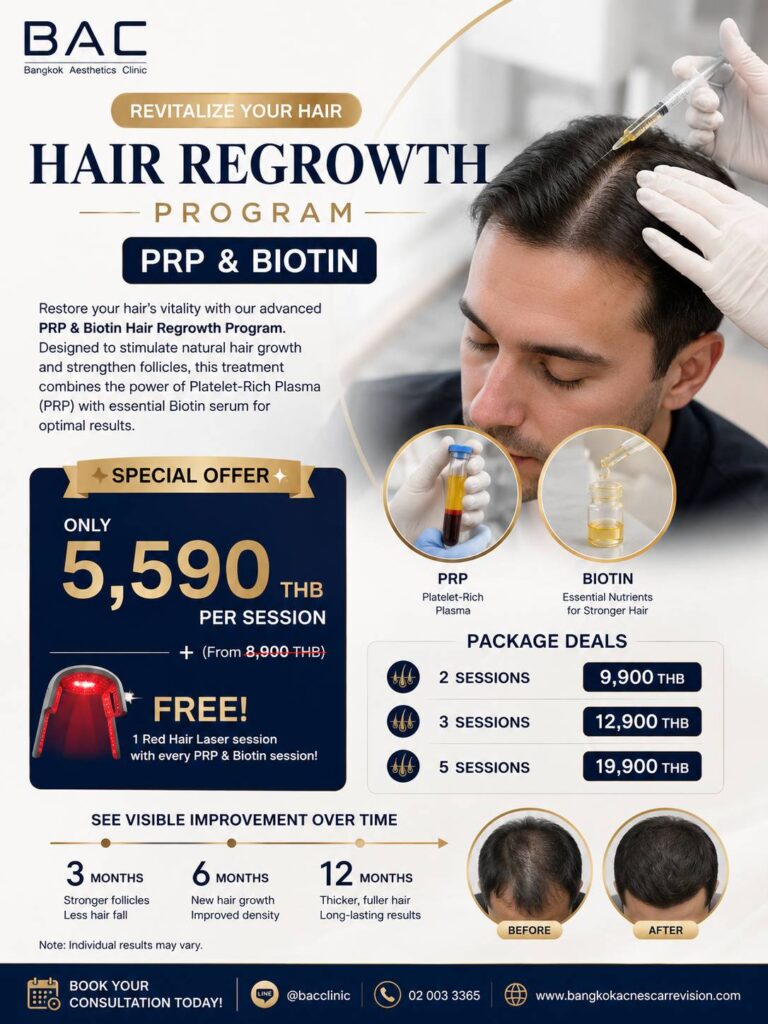
Many patients notice a reduction in hair shedding within the first 4–8 weeks after treatment. Improvements in hair thickness and density typically become more noticeable after 3–6 months, as healthier follicles progress through the natural hair growth cycle.
Results vary depending on several factors, including:
- The cause of hair loss
- Severity of thinning
- Individual healing response
- Treatment frequency
- Whether PRP is combined with other therapies
Maintaining realistic expectations is important. PRP aims to improve the quality and health of existing hair rather than create new follicles in completely bald areas.
How Many PRP Sessions Are Recommended?
PRP works best as a treatment program rather than a single procedure.
Most patients benefit from an initial series of treatments followed by maintenance sessions, depending on their individual response and the severity of hair loss.
At BAC, your physician will recommend a personalized treatment schedule after assessing your scalp and hair condition. This ensures you receive a plan tailored to your needs instead of a one-size-fits-all approach.
Why Choose BAC (Bangkok Aesthetics Clinic)?
At BAC, we believe successful hair restoration starts with an accurate diagnosis—not simply performing a procedure.
Our physicians carefully evaluate the cause of your hair loss before recommending treatment. Every PRP procedure is performed using medical-grade protocols and personalized treatment planning based on current scientific evidence.
Our commitment includes:
- Personalized medical consultation
- Evidence-based treatment protocols
- Experienced physicians
- Medical-grade PRP preparation
- Honest recommendations with realistic expectations
- English-speaking support for international patients
Our goal is simple: to help you achieve healthier, stronger hair through safe, effective, and scientifically supported treatments.
What to Expect During Your PRP Hair Treatment
PRP Hair Therapy is a straightforward outpatient procedure that typically takes 45–60 minutes, allowing you to return to your normal daily activities shortly after treatment.
Step 1: Medical Consultation & Hair Assessment
Your treatment begins with a consultation with one of our physicians. We evaluate your hair loss pattern, examine your scalp, review your medical history, and determine whether PRP is the most suitable treatment for your condition.
Step 2: Blood Collection
A small amount of blood is drawn from your arm, similar to a routine blood test.
The amount of blood collected depends on the PRP protocol used for your treatment.
Step 3: PRP Preparation
Your blood is placed into a medical centrifuge that separates the platelet-rich plasma from the other blood components.
The resulting PRP contains a concentrated level of platelets and natural growth factors that will be used for treatment.
Step 4: Scalp Preparation
The treatment area is cleansed thoroughly, and a topical numbing cream may be applied to improve comfort during the procedure.
Step 5: PRP Injection
The physician carefully injects the prepared PRP into areas affected by hair thinning using a series of small, precise injections.
The procedure is designed to deliver growth factors directly around weakened hair follicles where regeneration is needed.
Step 6: Aftercare
Most patients experience mild redness, tenderness, or slight swelling for a few hours after treatment. These effects are temporary and usually resolve quickly.
Your physician will provide personalized aftercare instructions, including when to wash your hair, when to resume exercise, and whether additional treatments or medications are recommended.
PRP Hair Treatment Timeline
While every patient responds differently, a typical timeline is:
Week 1–4
- Mild scalp recovery
- Hair shedding may gradually decrease
Month 2–3
- Hair follicles become more active
- New hair growth may begin
- Existing hair may feel stronger and healthier
Month 3–6
- Noticeable improvements in hair density and thickness
- Fuller appearance with continued treatment
Because hair grows gradually, consistent treatment and follow-up sessions are important for achieving and maintaining optimal results.
PRP Hair Treatment Aftercare
Following the proper aftercare instructions can help minimize irritation and support the healing process after your PRP Hair Treatment.
Immediately After Treatment (First 24 Hours)
- Avoid washing your hair or scalp for at least 24 hours.
- Do not touch, scratch, or massage the treated area.
- Avoid applying hair products such as wax, gel, hairspray, hair serum, or dry shampoo.
- Avoid swimming, saunas, steam rooms, hot baths, and hot yoga.
- Avoid strenuous exercise or activities that cause excessive sweating.
- Protect your scalp from direct sun exposure by wearing a loose-fitting hat if you need to be outdoors.
During the First 48 Hours
- Wash your hair gently using a mild shampoo once your physician advises it is appropriate.
- Avoid hair coloring, bleaching, perming, chemical straightening, or other chemical hair treatments.
- Refrain from scalp massages or microneedling.
- Continue avoiding excessive heat from hair dryers or styling tools if your scalp remains sensitive.
Medications
To maximize the regenerative effect of PRP:
- Avoid anti-inflammatory medications (NSAIDs) such as Ibuprofen, Naproxen, Diclofenac, or Aspirin for 5–7 days, unless prescribed by your physician for another medical condition.
- If needed, Paracetamol (Acetaminophen) is generally preferred for mild discomfort.
- Continue or restart hair loss medications such as Minoxidil or Finasteride only as instructed by your physician.
Lifestyle Recommendations
Healthy hair begins with a healthy body. To support the best possible outcome:
- Stay well hydrated by drinking plenty of water.
- Eat a balanced diet rich in protein, iron, zinc, and essential vitamins.
- Get adequate sleep to support tissue repair.
- Avoid smoking, as it may reduce blood circulation and affect the healing process.
- Limit excessive alcohol consumption during the first 24–48 hours.
What Is Normal After PRP?
It is common to experience:
- Mild redness of the scalp
- Slight swelling
- Tenderness or soreness at the injection sites
- Small pinpoint marks that usually disappear within 24–48 hours
These symptoms are temporary and generally resolve without treatment.
When Should You Contact the Clinic?
Although complications are uncommon, please contact your physician promptly if you experience:
- Increasing pain that does not improve
- Significant swelling or redness after 48 hours
- Fever or signs of infection
- Persistent bleeding or unusual discharge from the injection sites
Follow Your Recommended Treatment Plan
PRP delivers the best results when performed as part of a treatment program rather than a single session.
Attend your scheduled follow-up appointments so your physician can monitor your progress, assess your response to treatment, and recommend maintenance sessions or additional therapies when appropriate.
Book Your PRP Hair Consultation
If you’ve noticed increased hair shedding, thinning hair, or a receding hairline, early intervention can make a significant difference.
Schedule a consultation at BAC (Bangkok Aesthetics Clinic) to receive a comprehensive hair and scalp assessment. Our medical team will determine the underlying cause of your hair loss and recommend a personalized treatment plan designed to help you maintain healthier, fuller-looking hair.
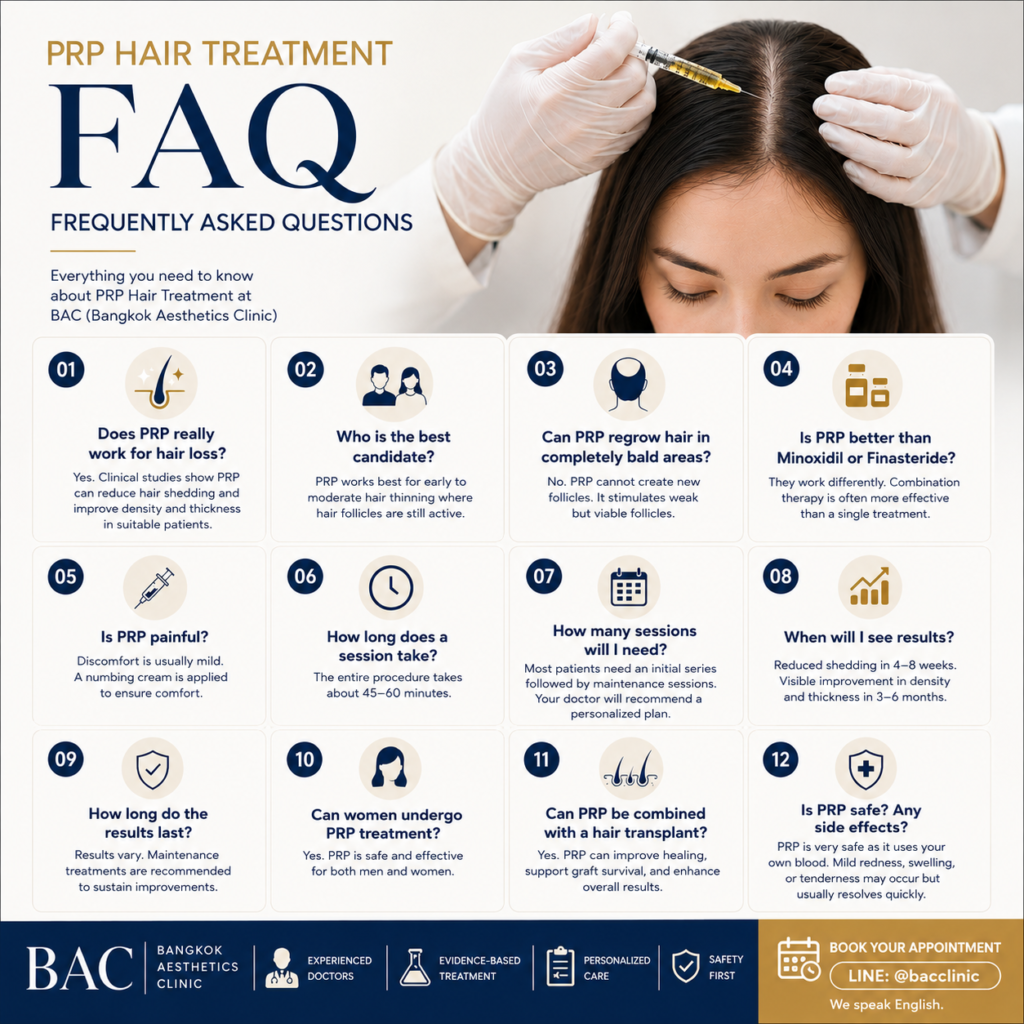
Frequently Asked Questions (FAQ)
Does PRP really work for hair loss?
PRP has been extensively studied for the treatment of androgenetic alopecia (male and female pattern hair loss). Multiple clinical studies and systematic reviews suggest that PRP can help reduce hair shedding, improve hair density, and increase hair thickness in appropriately selected patients. However, individual results vary depending on the cause and severity of hair loss.
Illustration (Part 2): PRP Hair Treatment Process
[ Blood Draw ] → [ PRP Separation ] → [ Growth Factor Concentrate ] → [ Scalp Injection ] → [ Hair Follicle Stimulation ]
Who is the best candidate for PRP Hair Therapy?
PRP is most effective for individuals with early to moderate hair thinning whose hair follicles are still active. Patients with male or female pattern hair loss often achieve the best results when treatment is started early.
Illustration: Ideal Candidate Profile
Early Thinning → Active Follicles → Good Response to PRP
Can PRP regrow hair in completely bald areas?
No. PRP cannot create new hair follicles where follicles have already been permanently lost. It works by stimulating weakened but still viable follicles. Patients with advanced baldness may require hair transplantation in addition to PRP.
Illustration: PRP Limitation
Active Follicle ✔ → PRP Works
Dead Follicle ✖ → PRP Not Effective
Is PRP better than Minoxidil or Finasteride?
Each treatment works differently. Minoxidil stimulates hair growth, Finasteride helps reduce the effects of DHT in suitable male patients, while PRP supports the natural regeneration of weakened hair follicles. In many cases, combining treatments provides better results than using a single therapy alone.
Illustration: Combination Approach
Minoxidil + Finasteride + PRP = Enhanced Hair Restoration Support
Is PRP painful?
Most patients experience only mild discomfort. A topical numbing cream is usually applied before treatment to improve comfort during the procedure.
Illustration: Comfort Level
Mild Discomfort ▓▓░░░ (Low)
How long does a PRP Hair Treatment session take?
The entire procedure, including consultation, blood collection, PRP preparation, and injections, usually takes 45–60 minutes.
Illustration: Treatment Timeline
Consult → Blood Draw → PRP Prep → Injection → Done (≈ 1 Hour)
How many PRP sessions will I need?
The recommended number of sessions depends on your hair condition and treatment goals. Most patients benefit from an initial treatment series followed by maintenance sessions to help preserve long-term results. Your physician will recommend a personalized treatment plan during your consultation.
Illustration: Treatment Plan Flow
Initial Series → Maintenance → Long-term Hair Support
When will I start seeing results?
Hair growth is gradual. Many patients notice reduced hair shedding within 4–8 weeks, while improvements in hair thickness and density generally become more noticeable after 3–6 months.
Illustration: Result Timeline
Week 4–8: Less Shedding
Month 3–6: Thicker Hair
How long do the results last?
Results vary from person to person. Maintenance treatments may be recommended to help sustain improvements, especially for patients with ongoing androgenetic alopecia.
Illustration: Maintenance Concept
PRP Effect → Gradual Decline → Maintenance Boost → Sustained Results
Can women undergo PRP Hair Treatment?
Yes. PRP is suitable for both men and women and is commonly used to treat female pattern hair thinning, postpartum hair loss (after medical evaluation), and age-related hair thinning.
Illustration: Suitable Patients
Men ✔ Women ✔ Postpartum ✔ Age-related thinning ✔
Can PRP be combined with a hair transplant?
Yes. PRP is frequently used before or after hair transplantation to help improve scalp healing, support graft survival, and enhance the quality of existing hair.
Illustration: Combined Treatment
Hair Transplant + PRP = Better Healing & Stronger Grafts
Is there any downtime after PRP?
Downtime is minimal. Mild redness, tenderness, or slight swelling may occur for a short period after treatment, but most patients are able to return to normal daily activities on the same day.
Illustration: Recovery
Day 0: Treatment
Day 1: Normal Activities ✔
Can I wash my hair after PRP?
It is generally recommended to avoid washing your hair for at least 24 hours after treatment. Your physician will provide personalized aftercare instructions based on your individual treatment.
Illustration: Aftercare Timeline
0–24 hrs: No washing
After 24 hrs: Gentle wash allowed
Are there any side effects?
PRP is considered a safe procedure because it uses your own blood. Temporary redness, tenderness, mild swelling, or small bruises at the injection sites are the most common side effects and usually resolve within a few days.
Illustration: Side Effects
Mild Redness → Swelling → Bruising → Recovery (Few Days)
Why should I choose BAC (Bangkok Aesthetics Clinic) for PRP Hair Treatment?
At BAC, every patient receives a comprehensive medical assessment before treatment. Our physicians use evidence-based protocols, personalized treatment planning, and medical-grade PRP preparation techniques to provide safe, scientifically supported care tailored to your individual hair restoration goals.
Illustration: BAC Treatment Journey
Assessment → Personalized Plan → Medical PRP → Follow-up → Hair Improvement Results
Learn more : https://bangkokacnescarrevision.com/prp-in-bangkok/
https://bestbotoxclinicinbangkok.com/prp-bangkok-price-and-treatment-guide
Contact Information and Location
BAC Clinic has been established with the aim of integrating top-tier treatment options with patient-centric healthcare that delivers value for your investment of time and money. Our proficient team is prepared to elevate the standards of medical tourism.
Clinic License Number : 10101010961
- Map and Directions: https://maps.app.goo.gl/kKE6w4nj5xS1ZHaX7
- BAC Clinic
180 Sixteenrh Place 1st floor, Sukhumvit soi 16,
Khlong Toei, Bangkok 10110, Thailand - (+66) 2 0033365
- baclasercenter@gmail.com
Opening Hours
Tuesday — Friday: 11:00 AM — 8:00 PM
Saturday-Sunday: 11:00 AM — 7:00 PM
Monday: Closed
Find us conveniently located in the vibrant district of Khlong Toei, right in the heart of Bangkok’s Sukhumvit 16 area. We are easily accessible by public transportation, with ample parking available for those who prefer to drive.
To determine whether you are a suitable candidate, Call us now (+66)2 0033365 or
- Line : https://bit.ly/3a4Sq1H
- Line : @bacclinic
- Instagram : BAC_CLINIC
- Facebook BAC Clinic or click bangkokaestheticsclinic