Why Long-Pulsed Nd:YAG Is an Excellent Choice for Men’s Laser Hair Removal in Bangkok
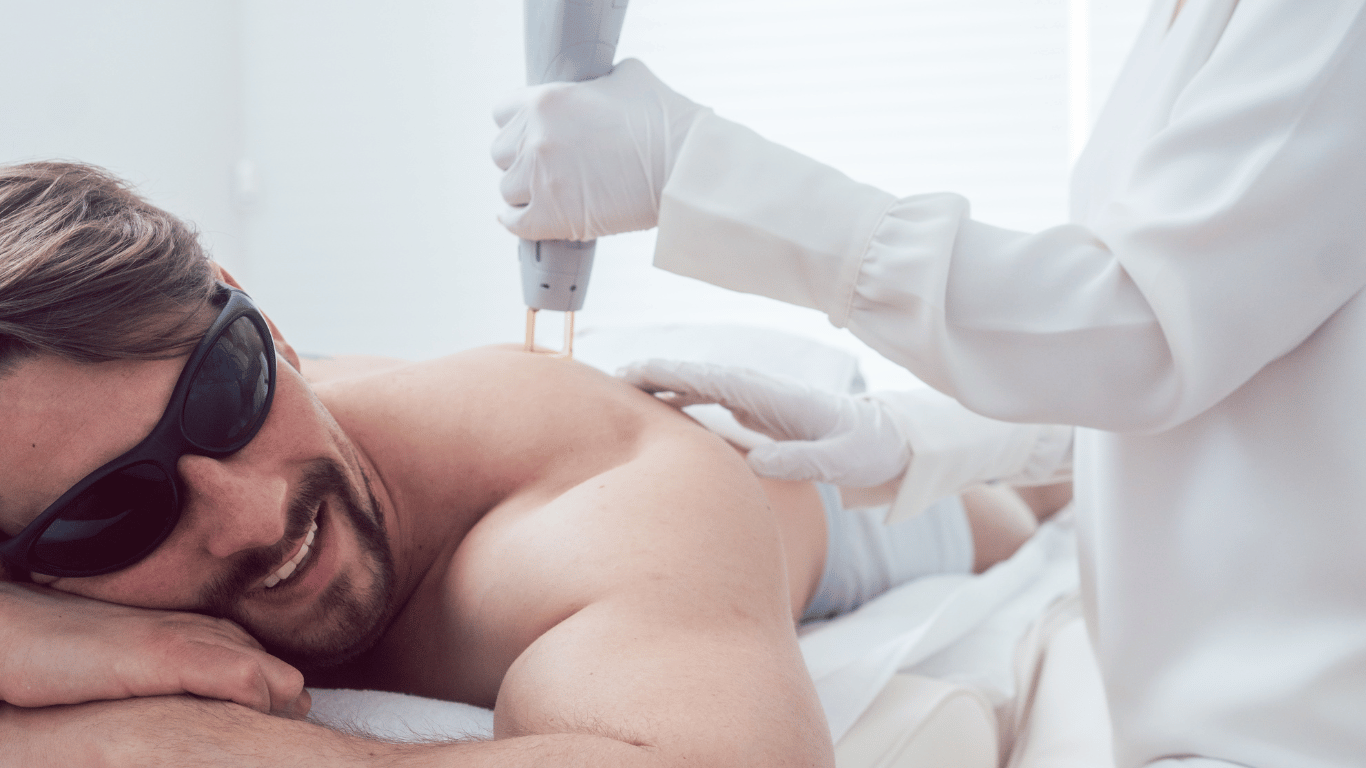
For many men, laser hair removal is not simply about having less body hair.
It may be about reducing the daily burden of shaving, controlling dense beard growth, creating a cleaner beard line, reducing hair on the chest or back, or dealing with recurring razor bumps and ingrown hairs around the beard and neck.
Male hair also presents a different treatment challenge. It is often coarser, denser and deeply rooted, particularly in areas such as the beard, neck, chest, abdomen and back.
This is one reason why Long-Pulsed Nd:YAG laser has become an important technology for male laser hair reduction.
At BAC (Bangkok Aesthetics Clinic), laser technology can be selected according to the patient’s skin tone, hair characteristics and treatment area rather than applying exactly the same technology to every patient.
For men with coarse, dark or deeply positioned hair—and particularly for patients with darker skin phototypes—Long-Pulsed Nd:YAG can offer important clinical advantages.
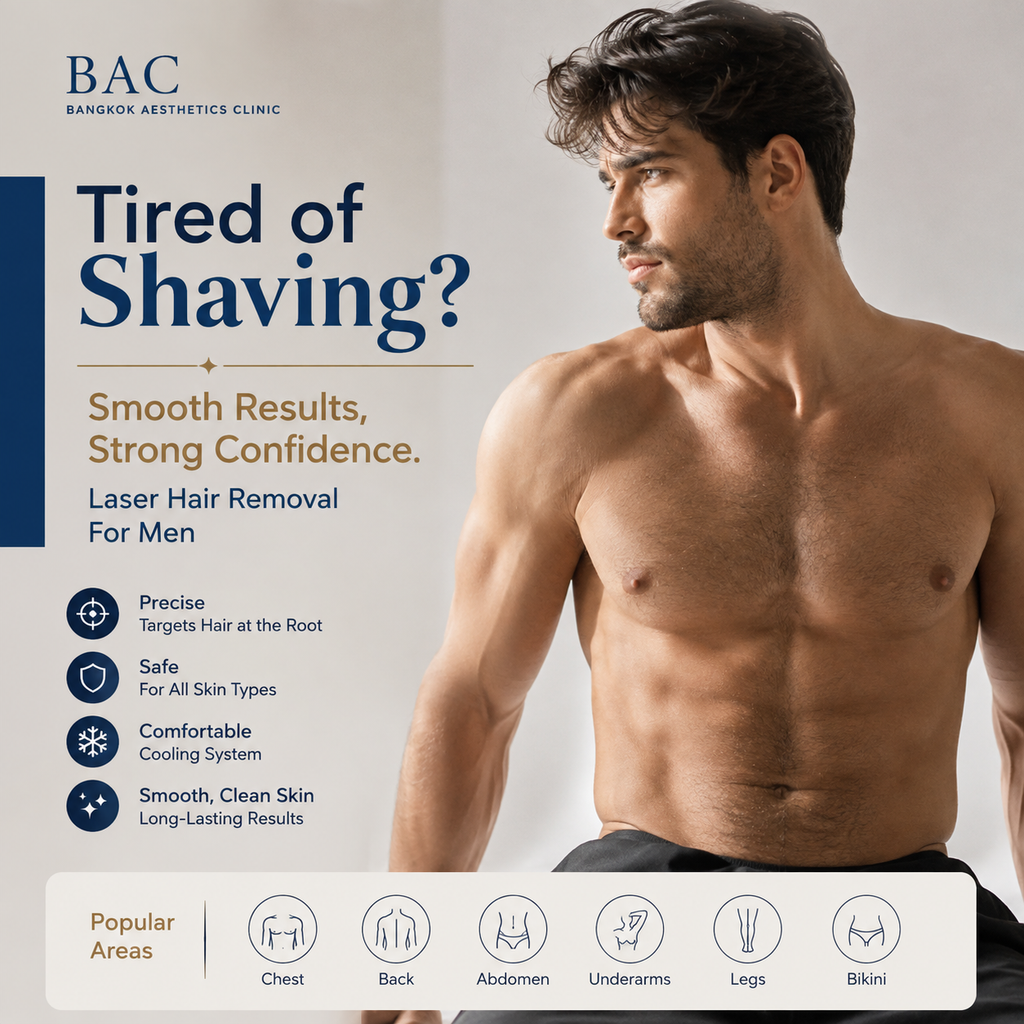
Why Is Men’s Laser Hair Removal Different?
Men commonly seek treatment for:
- Beard and neck hair
- Upper lip and moustache
- Chest
- Abdomen
- Back and shoulders
- Arms
- Underarms
- Legs
- Bikini and intimate areas
The challenge is that hair characteristics can vary dramatically even within the same patient.
A man may have extremely coarse terminal hair around the chin and neck, moderately thick hair across the chest, and much finer hair on the shoulders or upper arms.
This is precisely why the question should not simply be:
“Which laser is the strongest?”
A better question is:
“Which laser is appropriate for this hair, this skin tone and this anatomical area?”
What Is Long-Pulsed Nd:YAG Laser Hair Removal?
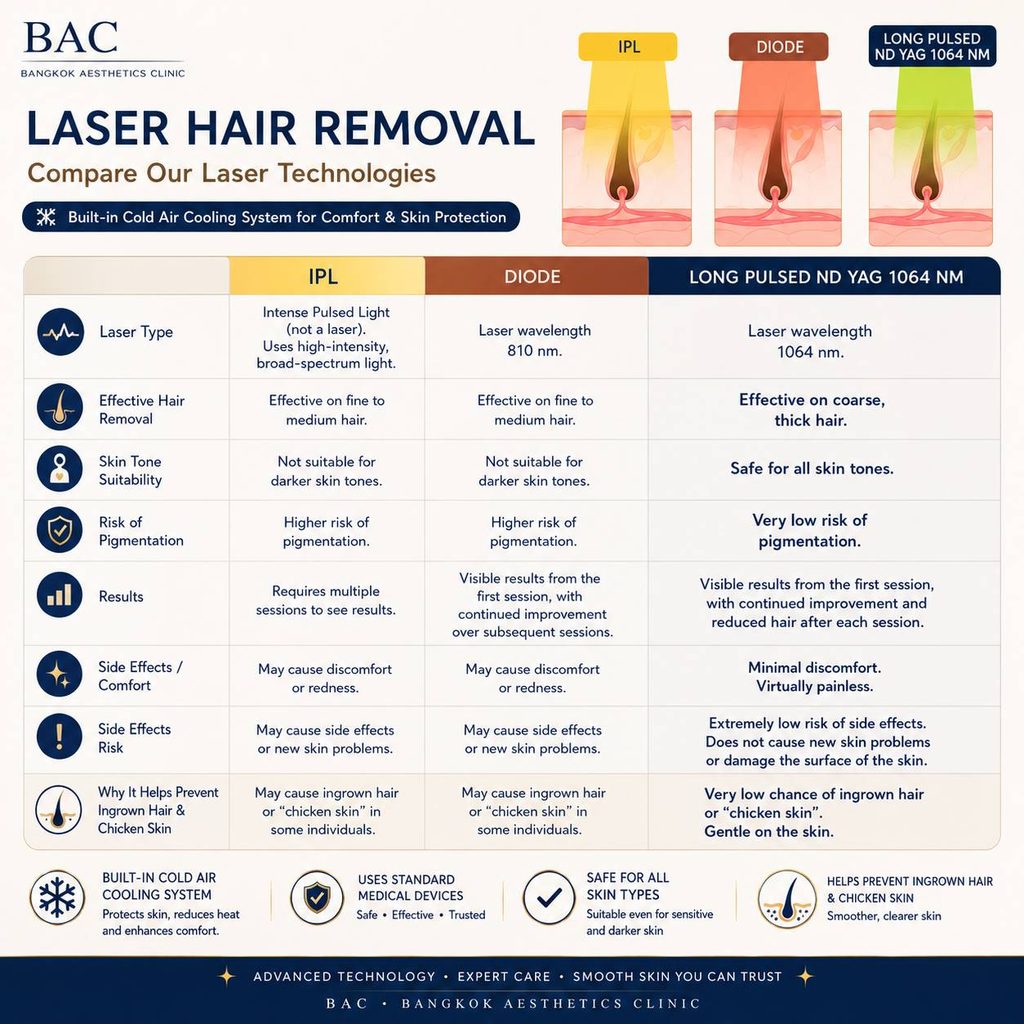
Long-Pulsed Nd:YAG is a laser technology commonly used for hair reduction that operates at a wavelength of 1064 nm.
Laser hair reduction works through the principle of selective photothermolysis. Pigment within the hair absorbs optical energy, which is converted into heat and transmitted toward structures associated with the hair follicle.
The objective is controlled thermal injury to the follicular structures responsible for hair production while minimizing unnecessary thermal damage to surrounding skin.
One of the distinguishing characteristics of 1064-nm Nd:YAG is its relatively lower absorption by epidermal melanin compared with shorter wavelengths.
This characteristic becomes particularly relevant when treating patients with more epidermal pigment.
Clinical literature supports the use of long-pulsed 1064-nm Nd:YAG for hair reduction across a broad range of skin phototypes. In one study involving Fitzpatrick skin types I–VI, three treatments produced measurable hair reduction on both facial and non-facial treatment sites, with adverse reactions generally described as transient.
Why Long-Pulsed Nd:YAG Can Be Particularly Useful for Men
1. It Is Well Suited to Coarse, Dark Male Hair
Male terminal hair—particularly beard, chest, abdomen and back hair—can contain substantial melanin and may have a relatively large shaft diameter.
This creates an appropriate chromophore for laser hair reduction.
For this reason, the classic combination of:
dark hair + coarse hair + appropriate laser parameters
can respond very well to laser treatment.
However, an important distinction should be made.
Long-Pulsed Nd:YAG should not be marketed as automatically superior for every fine hair.
Very fine, lightly pigmented, blond, grey or white hair contains less melanin and can therefore be more difficult for melanin-targeting laser technologies to treat effectively.
That distinction makes the information medically more credible.
2. The 1064-nm Wavelength Offers Deep Optical Penetration
One reason Nd:YAG is frequently discussed in relation to deeply positioned follicles is its 1064-nm wavelength.
Compared with shorter wavelengths used for hair removal, 1064 nm has relatively deep penetration into tissue while having lower epidermal melanin absorption.
This combination can be useful when treating substantial terminal hairs.
Clinical and histological research published in JAMA Dermatology supports the use of long-pulsed 1064-nm Nd:YAG for long-term epilation in darkly pigmented patients and discusses the importance of delivering thermal effects to follicular structures while protecting epidermal melanin.
For male patients, this can be particularly relevant in areas containing robust terminal hairs such as the:
beard • neck • chest • abdomen • back • legs
3. An Important Option for Darker Skin Types
This is one of the strongest evidence-based advantages of Long-Pulsed Nd:YAG.
Skin itself contains melanin.
With laser hair removal, therefore, the objective is not simply to heat pigment. The system needs to preferentially affect melanin associated with the hair while limiting unnecessary heating of epidermal pigment.
This becomes more challenging as skin pigmentation increases.
The longer 1064-nm wavelength has relatively lower absorption by epidermal melanin than several shorter wavelengths used for hair reduction.
Consequently, Long-Pulsed Nd:YAG has been extensively investigated for hair removal in darker skin phototypes.
A clinical study involving patients across Fitzpatrick skin types I–VI concluded that long-pulsed 1064-nm Nd:YAG with cooling was a safe and effective method of hair reduction across the skin types studied.
Research specifically involving highly pigmented skin has also demonstrated its clinical utility.
This is particularly relevant in an international clinic in Bangkok, where patients may have widely different ethnic backgrounds and skin phototypes.
4. One of the Most Interesting Applications for Men: Razor Bumps
For some men, the main reason for laser treatment is not cosmetic hair removal.
It is the constant cycle of:
shaving → irritation → ingrown hair → inflammation → dark marks → shaving again.
This condition is commonly known as pseudofolliculitis barbae (PFB).
It occurs when beard hairs curve or penetrate back into the skin, provoking an inflammatory reaction.
The neck and mandibular beard area are common locations.
Men with coarse or curly beard hair can be particularly susceptible.
And this is where the evidence for Long-Pulsed Nd:YAG becomes particularly interesting.
Long-Pulsed Nd:YAG and Pseudofolliculitis Barbae: What Does the Research Show?
A study published in the Journal of the American Academy of Dermatology investigated long-pulsed Nd:YAG in patients with pseudofolliculitis barbae and Fitzpatrick skin types IV–VI.
Researchers observed both hair reduction and a substantial reduction in papule formation in treated areas, concluding that Nd:YAG represented a potentially safe and effective option for reducing hair and subsequent PFB papules.
Another study specifically evaluated Long-Pulsed Nd:YAG in skin types V and VI. Significant reductions in both hairs and papules/pustules were observed following treatment.
A later randomized study compared Long-Pulsed Nd:YAG with chemical peeling for PFB. The laser group demonstrated a significantly greater reduction in papules/pustules in mandibular and neck areas at treatment completion and follow-up.
This gives men’s laser hair removal an important additional dimension:
Reducing problematic beard hair may also help reduce one of the underlying mechanical contributors to recurring shaving bumps.
5. Less Hair Can Mean Fewer Ingrown-Hair Problems
An ingrown hair requires a hair to grow.
Therefore, when effective laser treatment progressively reduces the number and calibre of hairs returning from treated follicles, there are fewer problematic hairs available to re-enter or irritate the skin.
This is particularly relevant around the:
neck, jawline and beard area.
Research on PFB supports this relationship between laser-assisted hair reduction and improvement in inflammatory lesions.
Laser treatment therefore offers some men something shaving cannot:
Instead of repeatedly removing only the visible portion of the hair, treatment aims at the hair-producing follicular unit beneath the skin.
Does Long-Pulsed Nd:YAG Prevent “Chicken Skin”?
This requires a little precision.
People use the expression “chicken skin” to describe several different conditions.
If the rough appearance comes from frequent shaving, follicular irritation or ingrown hairs, reducing hair growth may help make the area look and feel smoother over time.
But true keratosis pilaris is a separate follicular condition and should not be described as something that hair-removal laser automatically cures.
This distinction is important because good laser treatment begins with identifying what is actually causing the bumps.
Long-Pulsed Nd:YAG vs Diode vs IPL for Men
There is no scientifically defensible rule saying that every male patient should receive Nd:YAG.
Each technology has advantages.
IPL is technically an intense pulsed light system rather than a single-wavelength laser. It can be useful for selected hair and skin combinations.
Diode laser is widely used for hair reduction and can perform very well on appropriately selected patients, particularly dark terminal hair.
Long-Pulsed Nd:YAG becomes particularly attractive when deeper penetration, coarse terminal hair, darker skin phototypes or beard-related PFB are important considerations.
This is why BAC’s ability to work with different hair-removal technologies can actually be more valuable than simply owning one laser and using it on everyone.
Why BAC Clinic Does Not Believe One Laser Fits Everyone
This is one of the most important differences in our approach.
At BAC (Bangkok Aesthetics Clinic), we have access to multiple hair-reduction technologies, including:
IPL, Diode Laser and Long-Pulsed Nd:YAG.
Therefore, the objective is not to convince every patient that one machine is universally superior.
Instead, treatment selection can consider:
skin phototype + hair colour + hair thickness + hair density + follicular depth + anatomical area + previous laser response + tendency toward irritation or ingrown hairs.
For one patient, Diode may be appropriate.
For another, Long-Pulsed Nd:YAG may offer important advantages.
And treatment strategy can differ between body areas even in the same patient.
That is particularly relevant for international male patients because skin tones and hair characteristics vary enormously.
Why Multiple Sessions Are Still Necessary
Even powerful laser technology cannot remove every hair permanently in a single session.
Hair follicles move through different stages of the hair-growth cycle:
Anagen — active growth
Catagen — transition
Telogen — resting
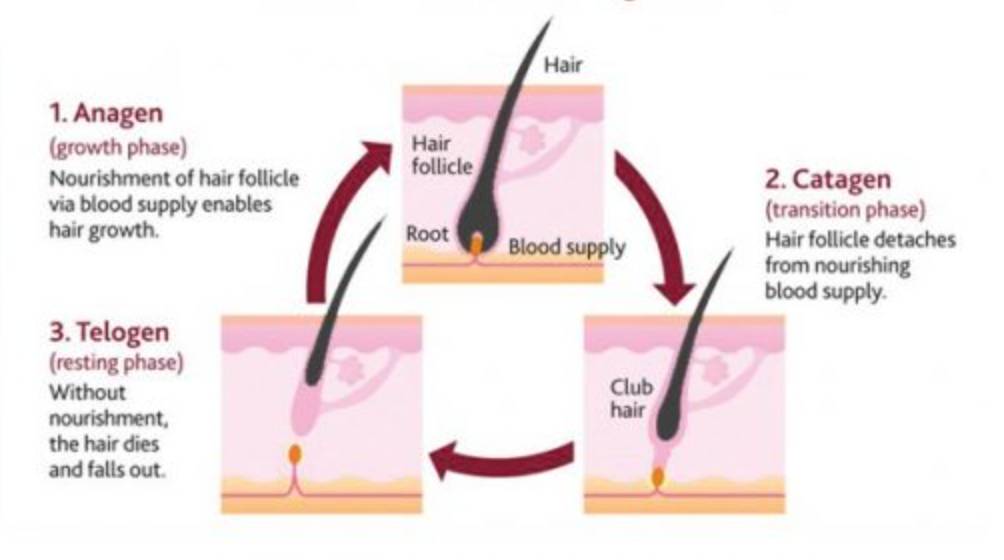
Laser hair reduction is generally most effective when an appropriate pigmented hair is in the active growth stage and can efficiently transmit thermal energy toward relevant follicular structures.
Because all follicles are not synchronized, treatment must be repeated as different populations of hair enter a more favourable stage.
This is why laser hair removal should be viewed as a treatment course, not a one-session procedure.
The exact number and interval vary according to anatomical area, density, hormonal influences and individual response.
What Does the Research Say About Long-Term Hair Reduction?
One frequently cited clinical study evaluated Long-Pulsed 1064-nm Nd:YAG across skin phototypes I–VI.
After three consecutive treatments, peak mean hair reduction one month after the treatment series ranged from approximately 58–62% for facial sites and 66–69% for non-facial sites.
At six months after the three-treatment series, mean reduction remained approximately 41–46% on facial sites and 48–53% on non-facial sites, depending on skin phototype.
These numbers also demonstrate why responsible clinics use the term long-term hair reduction, rather than promising that every follicle will disappear forever.
A systematic review covering 13 studies and 734 patients concluded that 1064-nm Nd:YAG showed promising beneficial effects and safety for photoepilation, while also noting that better-quality studies are still needed to standardize treatment parameters.
That is a much stronger basis for trust than promising “100% permanent removal.”
Men’s Beard Laser Hair Removal: Removal or Beard Shaping?
Men do not necessarily need to remove the entire beard.
Laser can also be considered for beard shaping.
For example, treatment may concentrate on unwanted hair:
under the jawline,
on the upper neck,
above the desired cheek line, or
in areas repeatedly affected by ingrown hairs.
This can preserve the beard while creating cleaner boundaries and reducing the amount of daily shaving required.
For men who still want facial hair, this distinction is important.
Cooling Matters Too
Laser energy produces heat—that is fundamental to how laser hair reduction works.
Cooling therefore plays an important role in treatment comfort and epidermal protection.
BAC’s Long-Pulsed Nd:YAG treatment is used together with a cooling system to help manage heat at the skin surface during treatment.
Clinical research on long-pulsed Nd:YAG hair removal has likewise evaluated the technology in conjunction with cooling.
Who May Be a Good Candidate for Long-Pulsed Nd:YAG?
Long-Pulsed Nd:YAG may be particularly worth considering for men who have:
dense dark body hair, coarse beard or neck hair, deeper skin tones, recurring razor bumps or ingrown hairs, substantial chest/back hair, or previous difficulty with other hair-removal approaches.
However, the technology still depends on melanin within the hair.
Grey, white and very lightly pigmented hair generally responds poorly to conventional melanin-targeting laser hair reduction.
Fine hair also needs careful assessment rather than automatically increasing laser intensity.
Why Choose BAC Clinic for Men’s Laser Hair Removal in Bangkok?
The advantage is not simply having a Long-Pulsed Nd:YAG system.
It is having more than one technology available.
BAC can select between Long-Pulsed Nd:YAG, Diode Laser and IPL according to the characteristics of the individual patient rather than forcing every skin tone and every type of hair into one treatment protocol.
For international patients in Bangkok, this is particularly valuable because two men asking for “back laser” may have completely different:
skin phototypes, hair diameters, hair colours, densities and treatment histories.
The technology should fit the patient—not the other way around.
Frequently Asked Questions
Is Long-Pulsed Nd:YAG good for men’s beard hair?
It can be an excellent option for appropriately selected dark, coarse beard hair. Clinical research also supports its use for reducing hair and inflammatory lesions associated with pseudofolliculitis barbae.
Is Nd:YAG suitable for dark skin?
Long-Pulsed 1064-nm Nd:YAG is particularly well established for hair reduction in darker skin phototypes because its wavelength has relatively lower interaction with epidermal melanin than shorter-wavelength systems. Studies have evaluated its use in skin types IV–VI and across I–VI.
Is Nd:YAG better than Diode for men?
Not universally. Hair diameter, colour, density, skin phototype and treatment area all matter. This is precisely why BAC has more than one hair-reduction technology available.
Can laser help with razor bumps?
Yes, particularly when the bumps are caused by pseudofolliculitis barbae. Multiple clinical studies have demonstrated reductions in inflammatory lesions following Long-Pulsed Nd:YAG treatment.
Can men use laser for beard shaping without removing the whole beard?
Yes. Treatment can be restricted to selected areas such as the neck or cheek boundaries while retaining the desired beard.
Does laser permanently remove 100% of men’s hair?
No responsible clinic should guarantee this. The more scientifically accurate objective is long-term or permanent hair reduction, with results varying between individuals.
How many sessions do men need?
Multiple sessions are generally necessary because hairs are not simultaneously in the same growth stage. The required course depends on treatment area, hair density, skin type, hormonal influences and individual response.
Can Long-Pulsed Nd:YAG treat fine hair?
Fine pigmented hair may respond, but generally the less pigment and smaller the hair shaft, the more challenging laser treatment becomes. White and grey hairs are particularly poor targets for conventional melanin-based hair-removal lasers.
Which areas can men treat?
Common areas include the beard, neck, underarms, chest, abdomen, shoulders, back, arms and legs. Treatment planning should be adapted to each anatomical area.
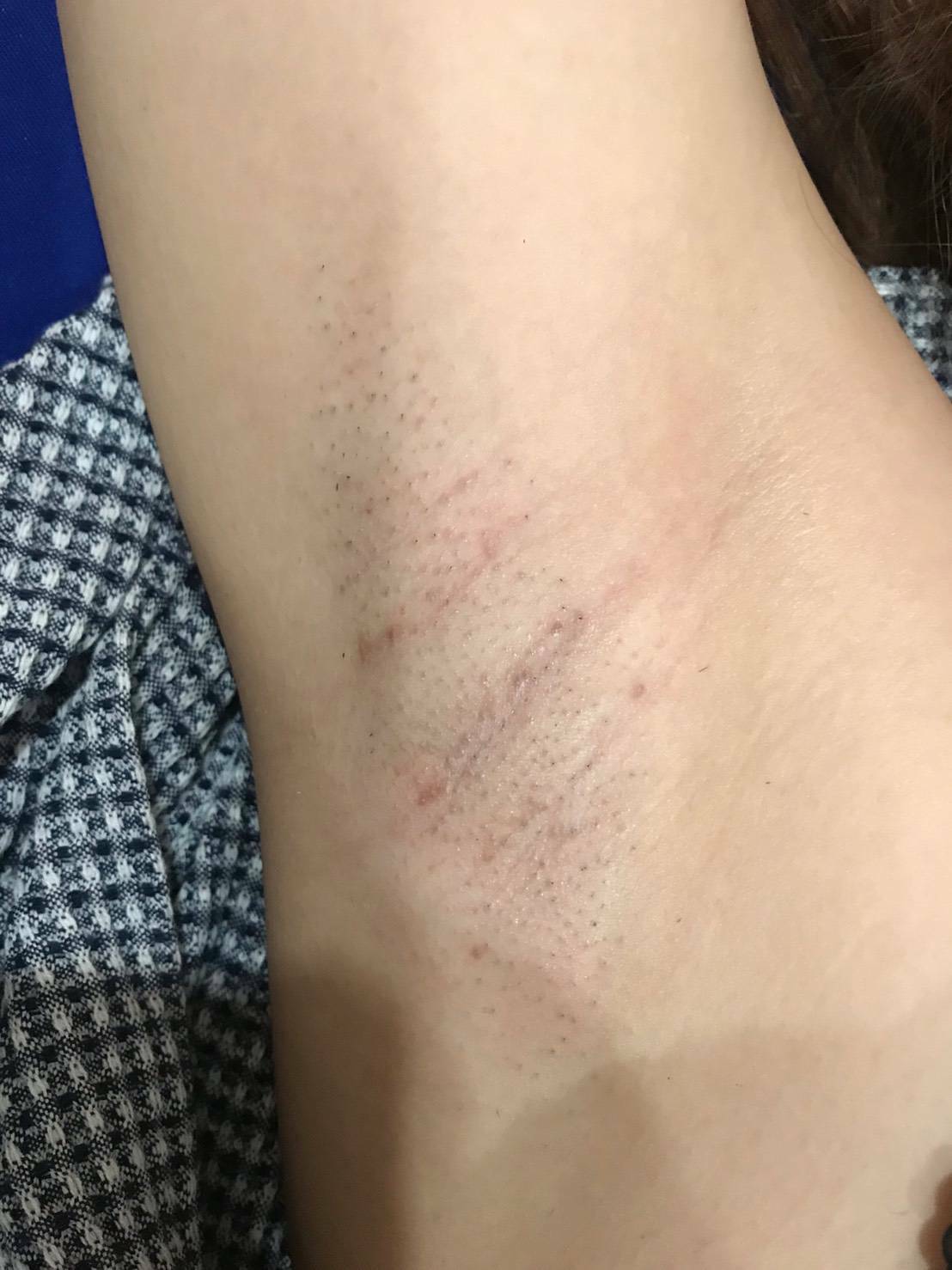
Testimonials
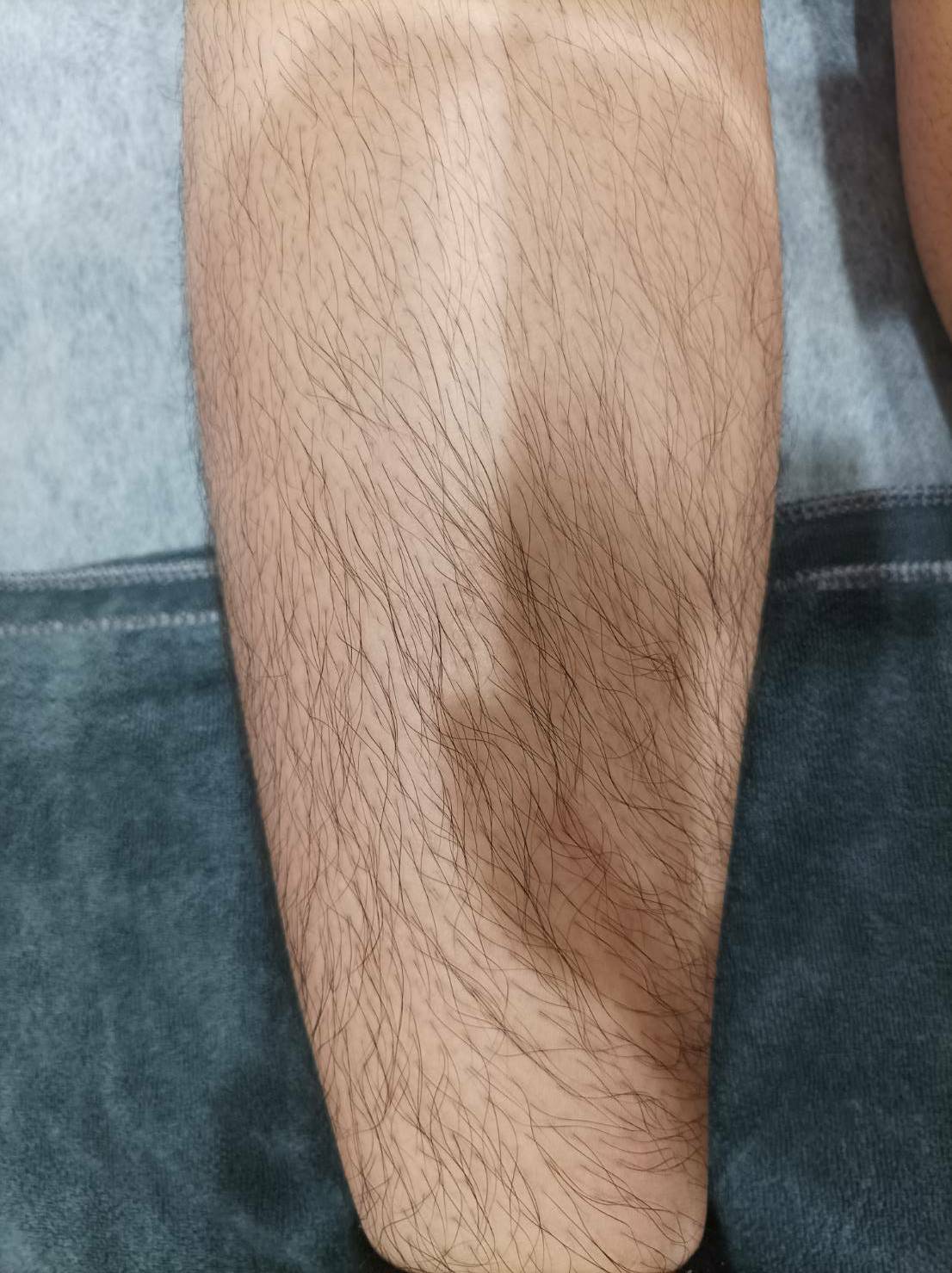 Before
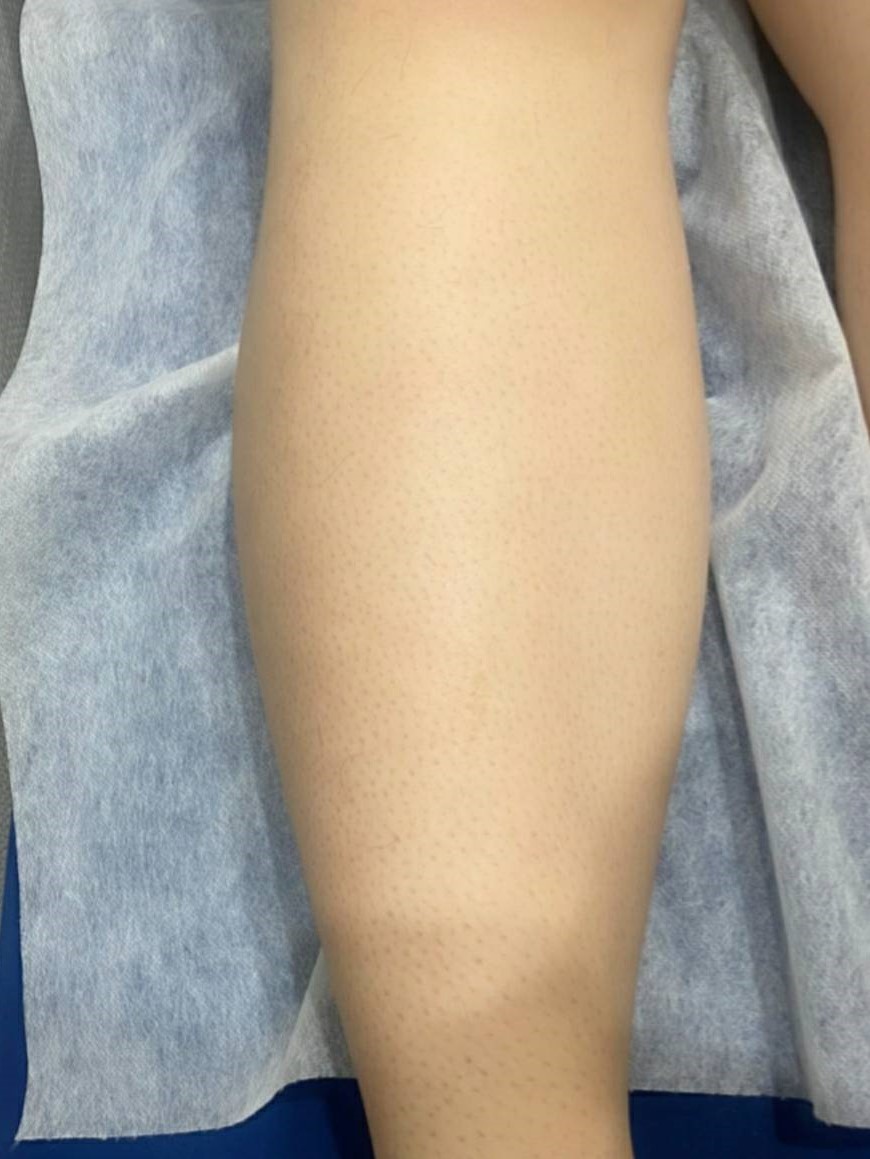 After
After
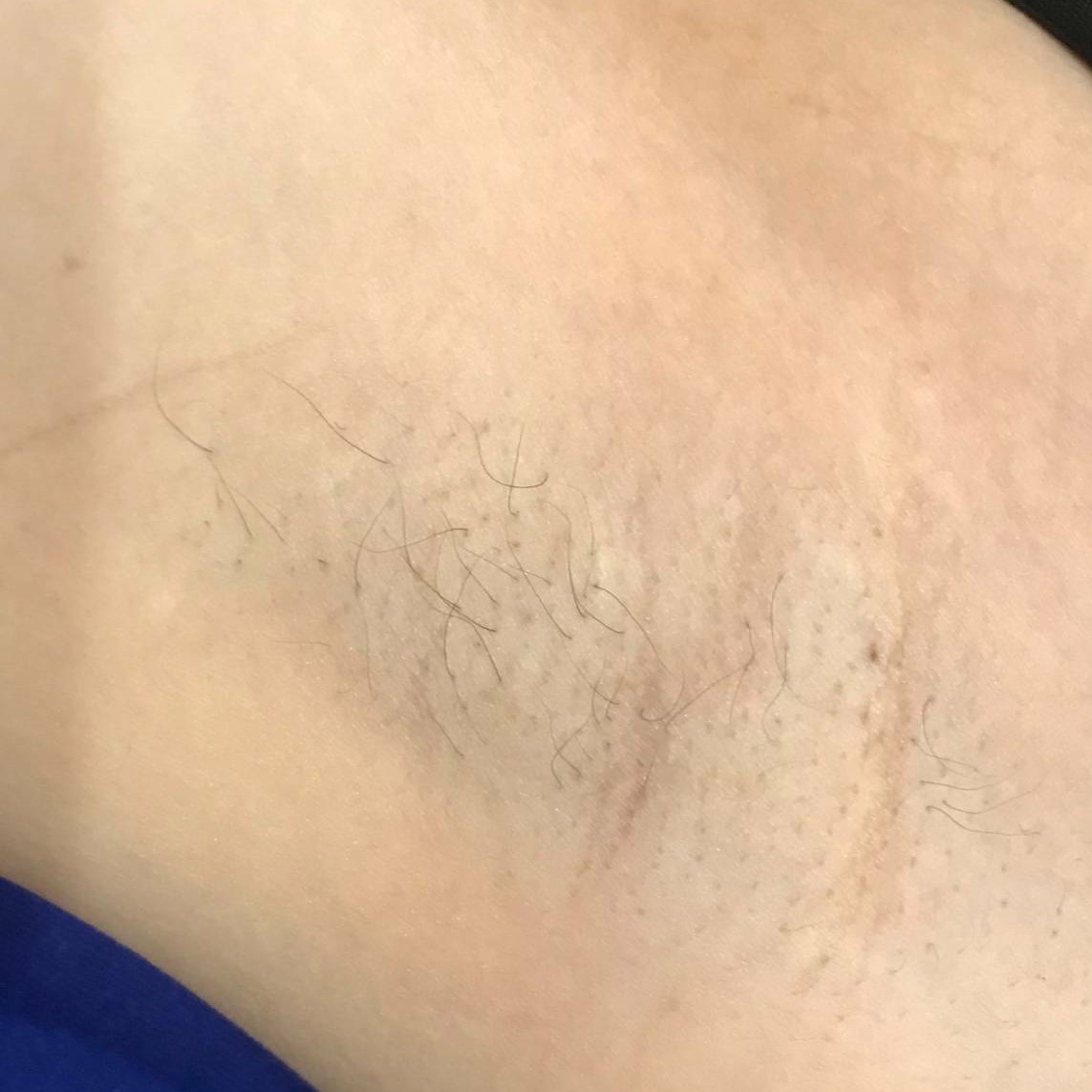 Before
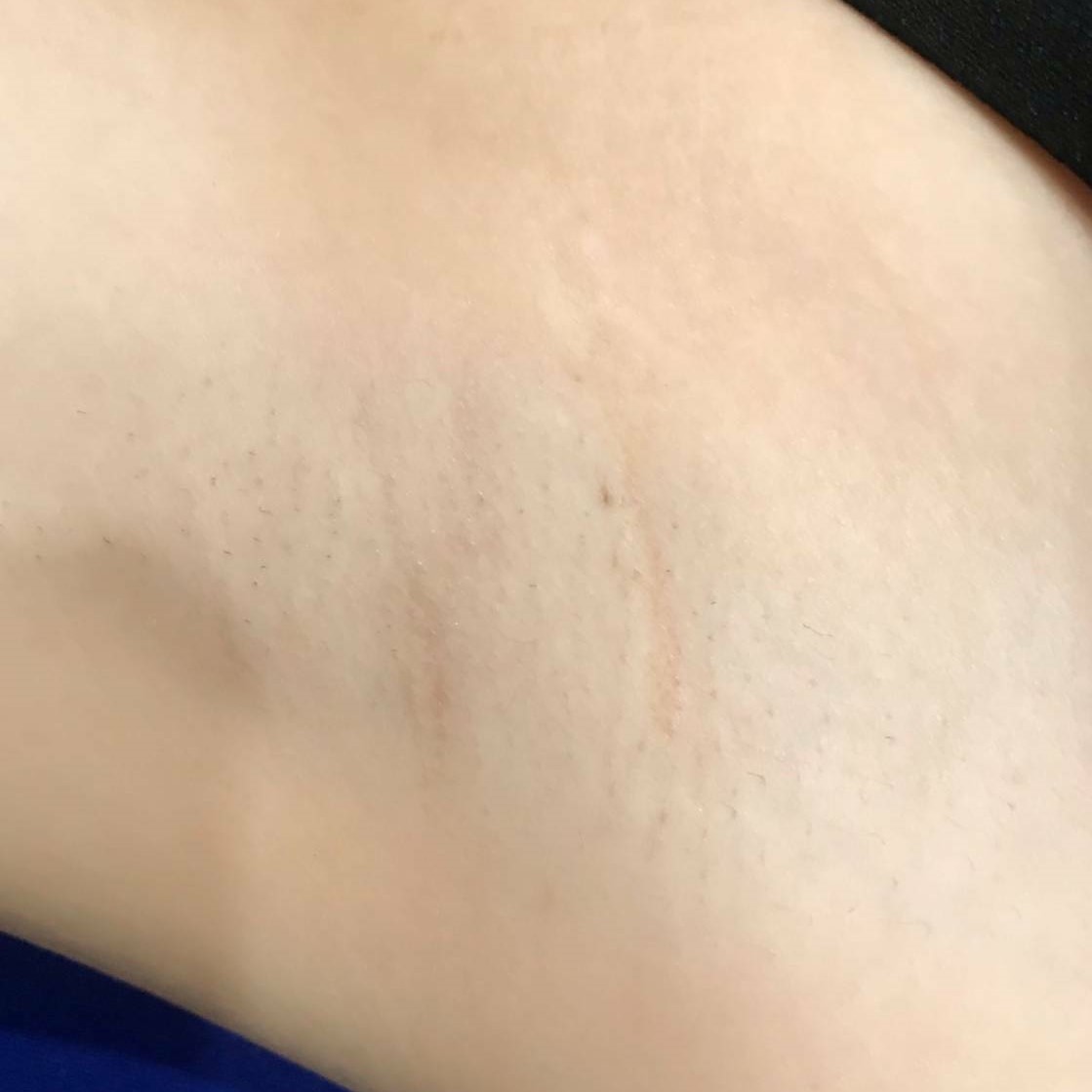 After
After
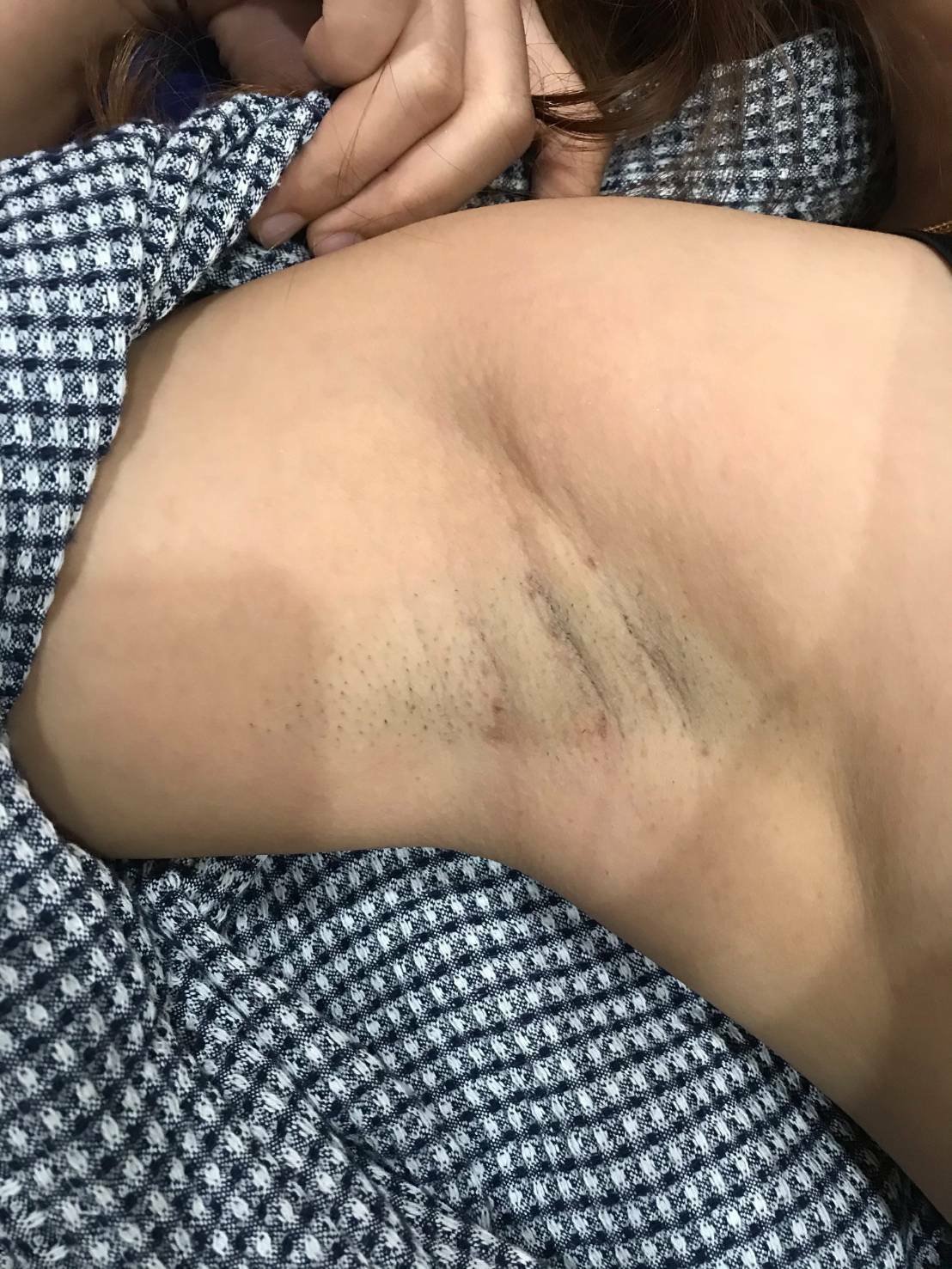 Before
Men’s Laser Hair Removal in Bangkok: Choose the Technology for Your Hair, Not Just the Machine Name
For male laser hair removal, stronger is not automatically better.
Successful treatment depends on matching the laser to the hair, follicle, skin and treatment area.
Long-Pulsed Nd:YAG is particularly compelling for male patients because of its deep optical penetration, established use across a broad range of skin phototypes, suitability for dark terminal hair and clinical evidence supporting its use in pseudofolliculitis barbae.
At BAC (Bangkok Aesthetics Clinic), access to IPL, Diode and Long-Pulsed Nd:YAG allows treatment selection to be based on the individual rather than a one-machine-fits-all approach.
For men dealing with dense body hair, difficult beard hair, repeated shaving irritation or ingrown hairs, that distinction matters.
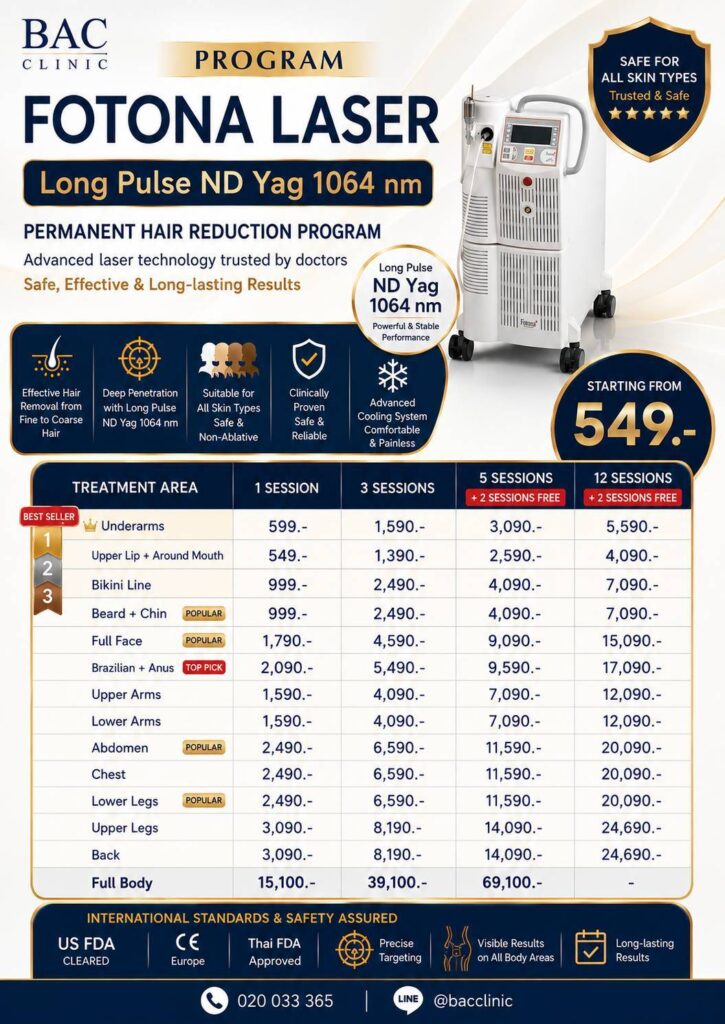
Laser Hair Removal in Bangkok — Advanced Laser Care from ฿549
Different Skin. Different Hair. The Right Laser Matters.
Individual results vary. Hair reduction generally requires multiple sessions according to the hair-growth cycle.
BAC Clinic Bangkok – Sukhumvit 16
LINE: @bacclinic
Tel: 02-003-3365
References
- Alster TS, Bryan H, Williams CM. Long-pulsed 1064-nm Nd:YAG laser-assisted hair removal in all skin types. Dermatologic Surgery. 2001.
PubMed – Long-Pulsed Nd:YAG Hair Removal in All Skin Types - Ross EV, Cooke LM, Timko AL, et al. Treatment of pseudofolliculitis barbae in skin types IV, V, and VI with a long-pulsed Nd:YAG laser. Journal of the American Academy of Dermatology. 2002;47(2):263–270.
PubMed – Pseudofolliculitis Barbae and Long-Pulsed Nd:YAG - Treatment of pseudofolliculitis barbae using the long-pulse Nd:YAG laser on skin types V and VI.
PubMed – Nd:YAG in Skin Types V and VI - Amer A, Elsayed A, Gharib K. Evaluation of efficacy and safety of chemical peeling and long-pulse Nd:YAG laser in treatment of pseudofolliculitis barbae. Dermatologic Therapy. 2021;34:e14859.
PubMed – Long-Pulsed Nd:YAG vs Chemical Peeling for PFB - Shokeir H, et al. Pseudofolliculitis barbae treatment: Efficacy of topical eflornithine, long-pulsed Nd:YAG laser versus their combination. Journal of Cosmetic Dermatology. 2021.
PubMed – Long-Pulsed Nd:YAG for Pseudofolliculitis Barbae - Long-Pulsed Nd:YAG Laser-Assisted Hair Removal in Pigmented Skin: A Clinical and Histological Evaluation. JAMA Dermatology.
JAMA Dermatology – Clinical and Histological Evaluation - Efficacy and safety of Nd:YAG 1064 nm lasers for photoepilation: a systematic review.
PubMed – Systematic Review of Nd:YAG Photoepilation