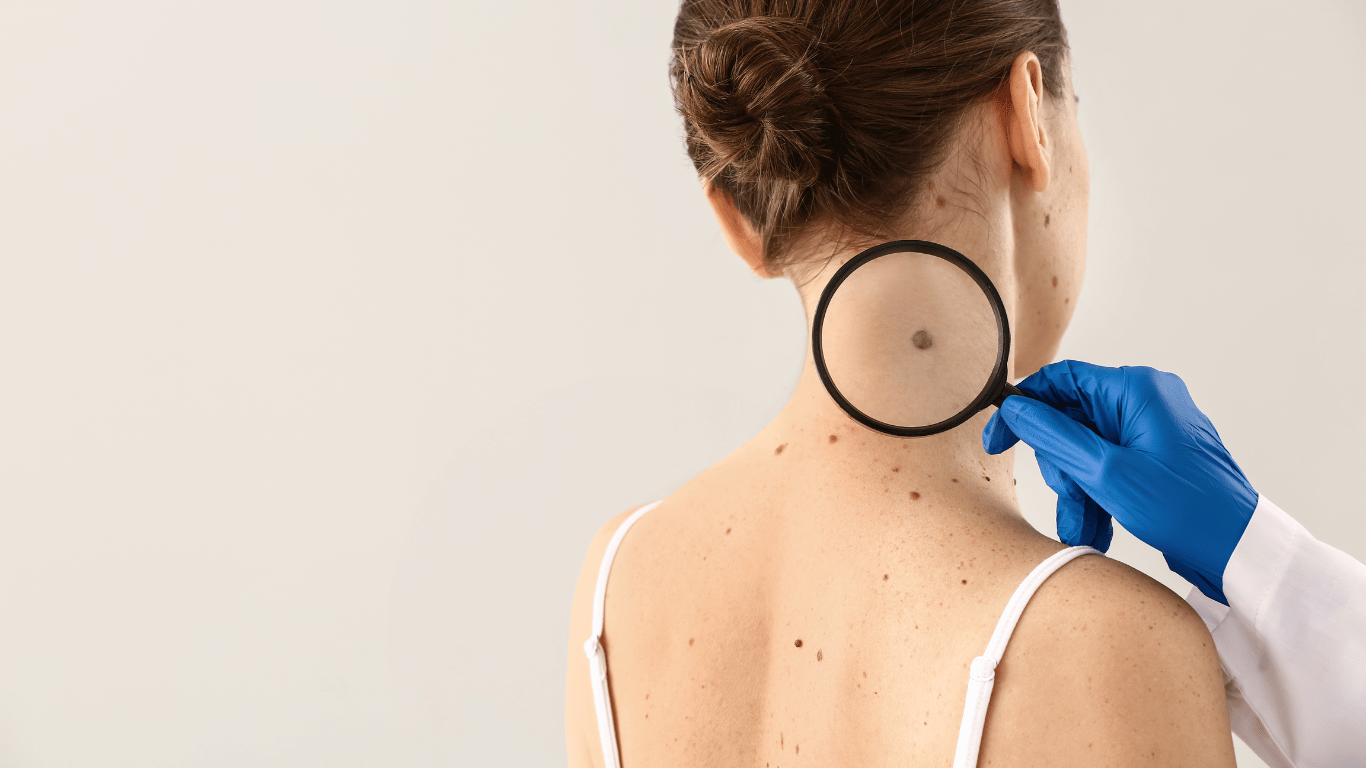
CO2 Laser Bangkok: Mole, Skin Tag, Wart and Milia Removal at BAC Clinic
Small growths such as moles, skin tags, warts, milia and seborrheic keratoses may be harmless, yet they can affect the appearance and texture of the skin. Some catch on clothing or jewellery, while others become more noticeable when applying makeup or taking close-up photographs.
If you are searching for CO2 laser treatment in Bangkok, the first step should not be choosing the cheapest removal package. It should be having each spot examined by a doctor.
Different skin growths can look surprisingly similar, but they may require different treatment approaches. A mole should not automatically be treated in the same way as a wart, skin tag, milia or seborrheic keratosis.
At BAC – Bangkok Aesthetic Clinic, each lesion is assessed individually before treatment. If the doctor considers it suitable, consultation and CO2 laser removal may be completed during the same visit.
Where Can I Get Mole or Skin Tag Removal in Bangkok?
Choose a clinic that provides:
- An in-person assessment by a doctor
- Individual evaluation of every lesion
- Laser settings adjusted to the lesion’s type, size, depth and location
- Honest information about healing, pigmentation, scarring and recurrence
- Clear written aftercare instructions
- Transparent pricing before treatment
- Follow-up support if the lesion reappears or the wound does not heal normally
BAC Clinic provides doctor-assessed mole, skin tag, wart and milia removal in central Bangkok, near Asok and the Queen Sirikit National Convention Centre.
English-language appointment support is available, and the doctor can communicate in English. International visitors may consult and receive treatment on the same day when medically appropriate.
What Is a CO2 Laser?
A carbon dioxide or CO2 laser is an ablative medical laser with a wavelength of approximately 10,600 nanometres. This wavelength is strongly absorbed by water within skin tissue.
The absorbed energy produces controlled heat, allowing the doctor to vaporise or remove selected tissue in a precise area. It can also coagulate very small blood vessels during treatment.
CO2 laser energy is absorbed by water molecules in skin cells and converted into heat. This allows controlled tissue vaporisation and coagulation.
A focused CO2 laser may be used to remove certain raised or superficial skin growths. However, it is not automatically suitable for every mole or bump. The doctor must first determine what the lesion is and whether laser removal is appropriate.
What Can CO2 Laser Remove?
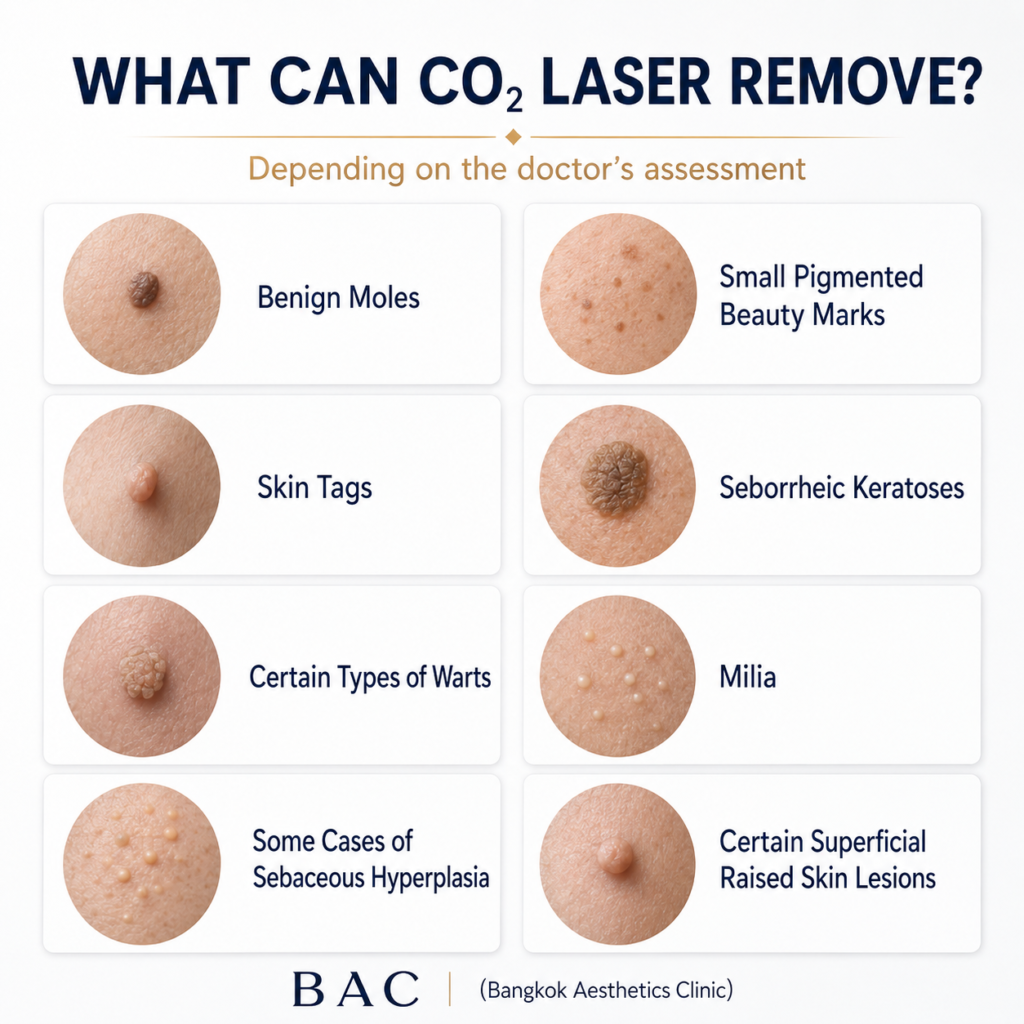
Depending on the doctor’s assessment, focused CO2 laser treatment may be considered for:
- Benign moles
- Small pigmented beauty marks
- Skin tags
- Seborrheic keratoses
- Certain types of warts
- Milia
- Some cases of sebaceous hyperplasia
- Certain superficial raised skin lesions
CO2 laser treatment is also used in other forms for skin resurfacing and scar treatment. However, this article focuses specifically on the targeted removal of individual skin growths, not full-face fractional resurfacing.
1. Mole Removal in Bangkok
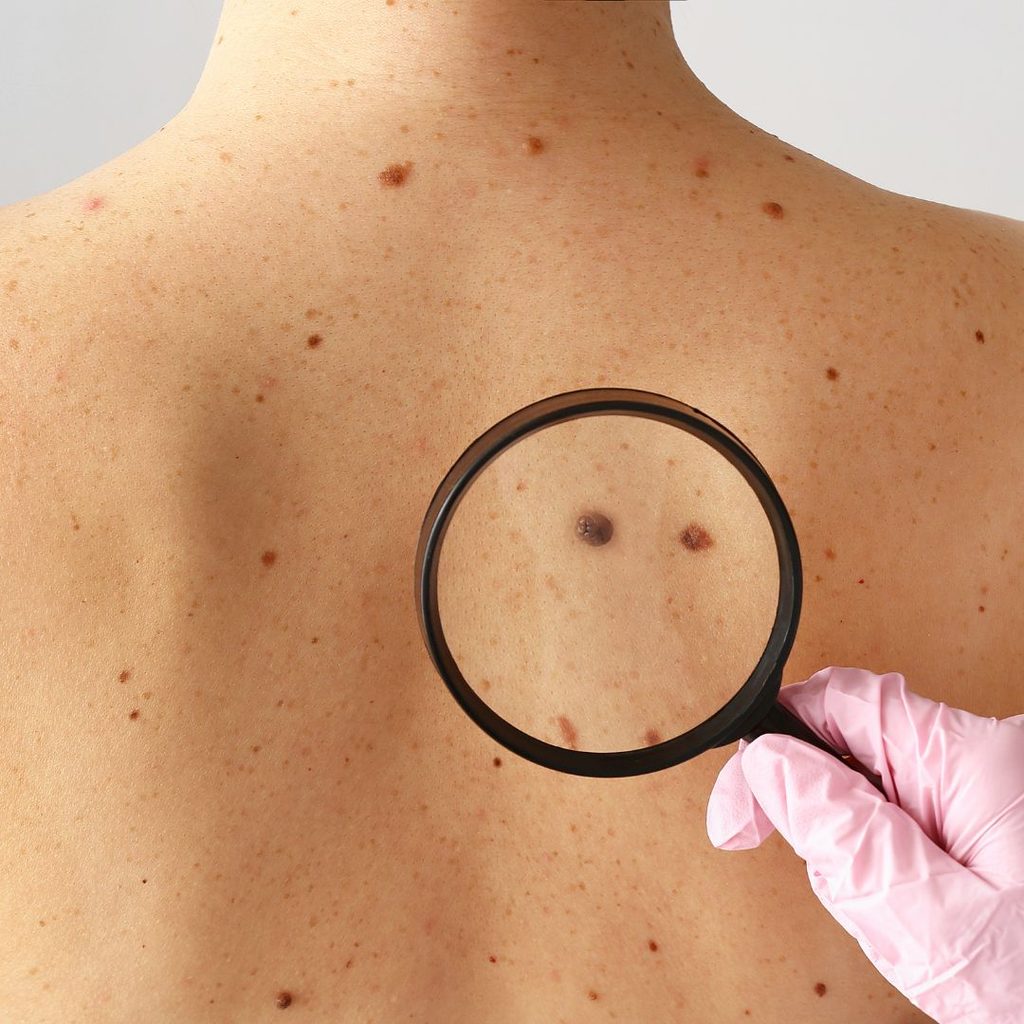
Moles are clusters of pigment-producing cells. They may be flat or raised and can appear brown, black, skin-coloured or occasionally another shade.
Most common moles are harmless. Some people choose to remove them because they:
- Affect facial appearance
- Interfere with shaving
- Catch on clothing or jewellery
- Become irritated by repeated friction
- Feel uncomfortable in a particular location
Small, superficial moles that appear clinically benign may be suitable for CO2 laser removal. Deeper or larger moles may require a different approach, particularly when the doctor wants the entire lesion removed for examination.
Laser treatment is therefore not the correct method for every mole.
Can a mole grow back after CO2 laser removal?
A mole may reappear if pigment-producing cells remain beneath the skin. Deeper treatment is not always automatically better because treating too deeply may increase the likelihood of textural change or scarring.
The doctor must balance adequate removal with protection of the surrounding skin. Occasionally, a staged or repeat treatment may be more appropriate than excessively deep removal during one visit.
If a mole grows back, changes in appearance or develops new symptoms, it should be examined again. Mayo Clinic advises seeing a healthcare professional promptly if a removed mole grows back.
2. Beauty Mark Removal
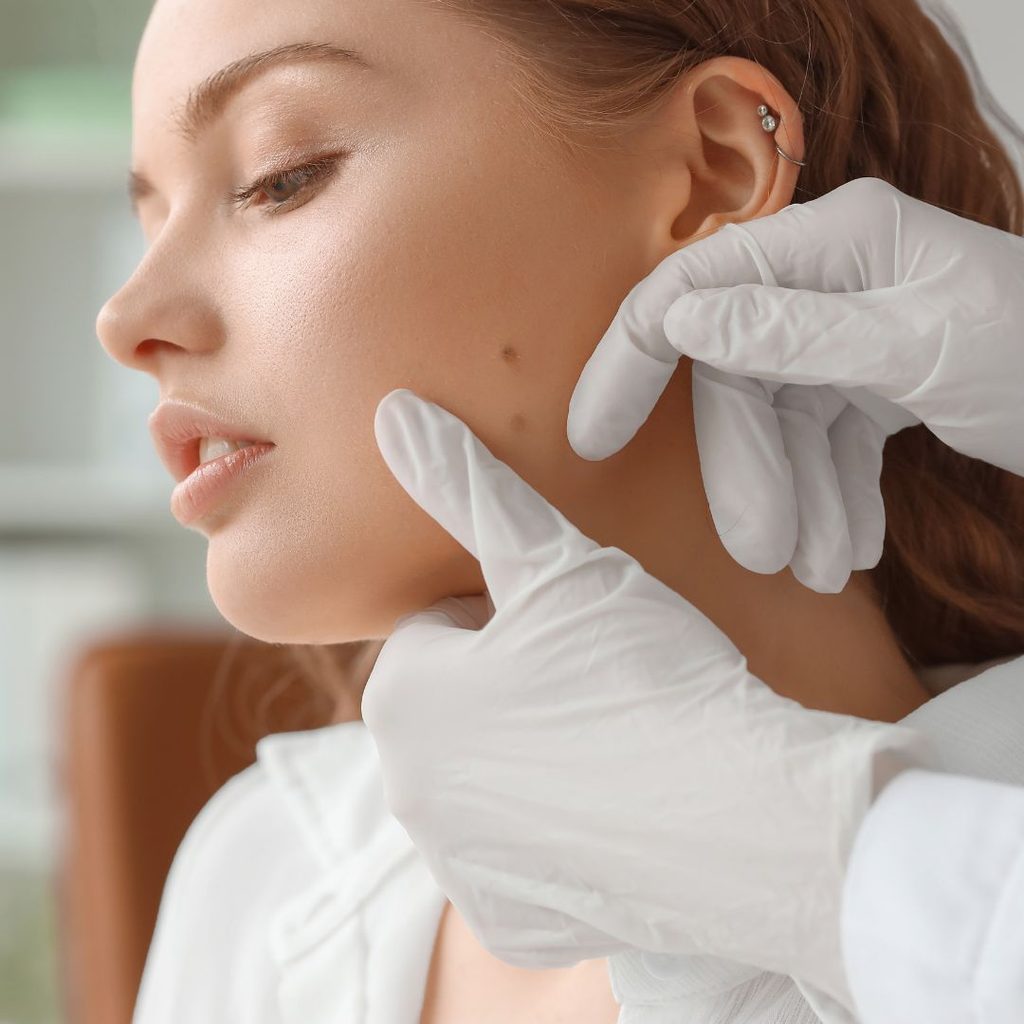
“Beauty mark” is a non-medical term commonly used for a small, dark pigmented spot. Some beauty marks are small moles, while others may be a different type of pigmentation.
Although these spots are often tiny, the doctor should still assess them before treatment. A dark spot should not be assumed to be harmless solely because of its size.
When the spot is considered suitable for CO2 laser, the doctor can treat it point by point using settings selected for its visible depth and location.
3. Skin Tag Removal in Bangkok
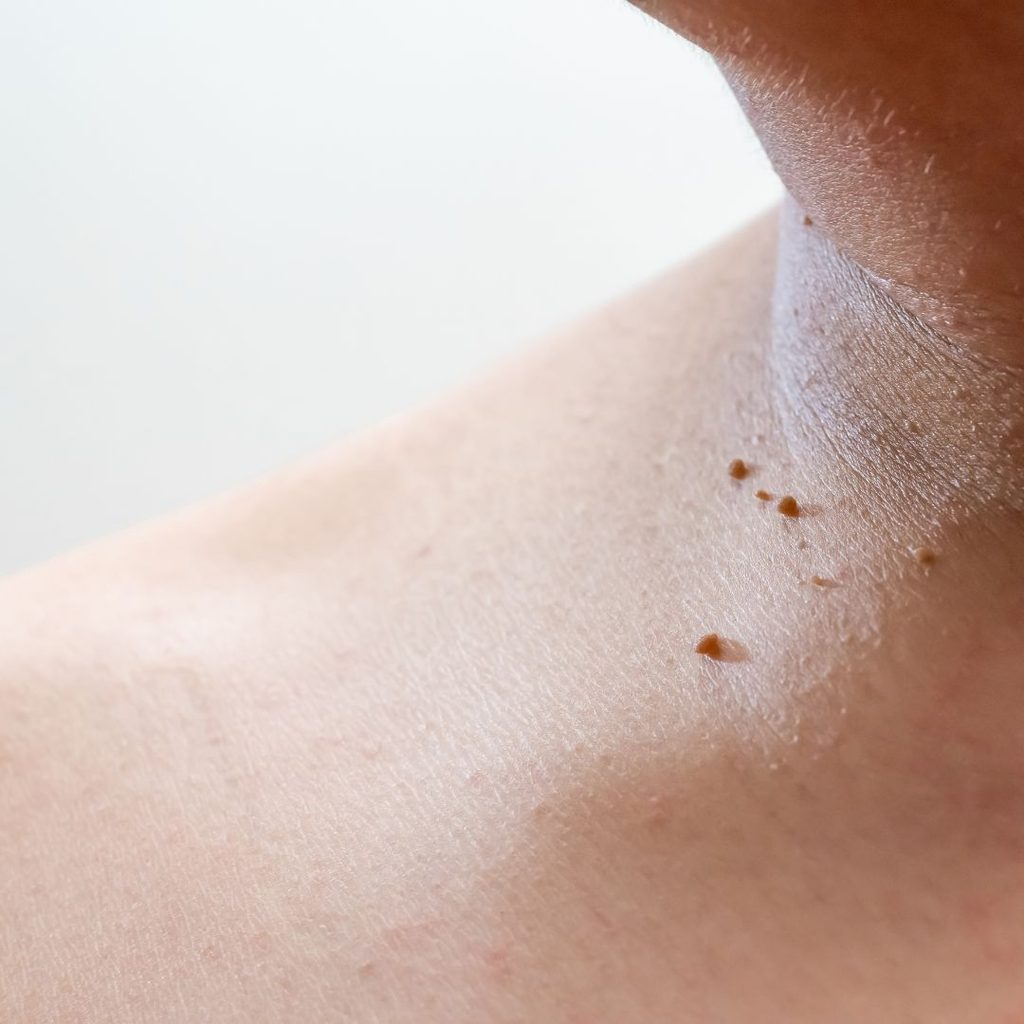
Skin tags are small, soft growths that often appear in areas of friction, including:
- The neck
- Underarms
- Beneath the breasts
- Around the eyelids
- Groin folds
- Areas where clothing or jewellery repeatedly rubs the skin
They are usually harmless but may become irritated, twisted or inflamed. Some people also develop many skin tags in the same area.
CO2 laser may be used to remove small skin tags individually. The treatment method depends on the size, base and location of each growth.
The American Academy of Dermatology notes that the appropriate method for skin tag removal depends on its size, location and other individual factors.
Never cut, tie, burn or apply corrosive products to a skin tag at home. A growth that looks like a skin tag may be something else, and home removal can cause infection, bleeding, burns and scarring.
4. Seborrheic Keratosis Removal
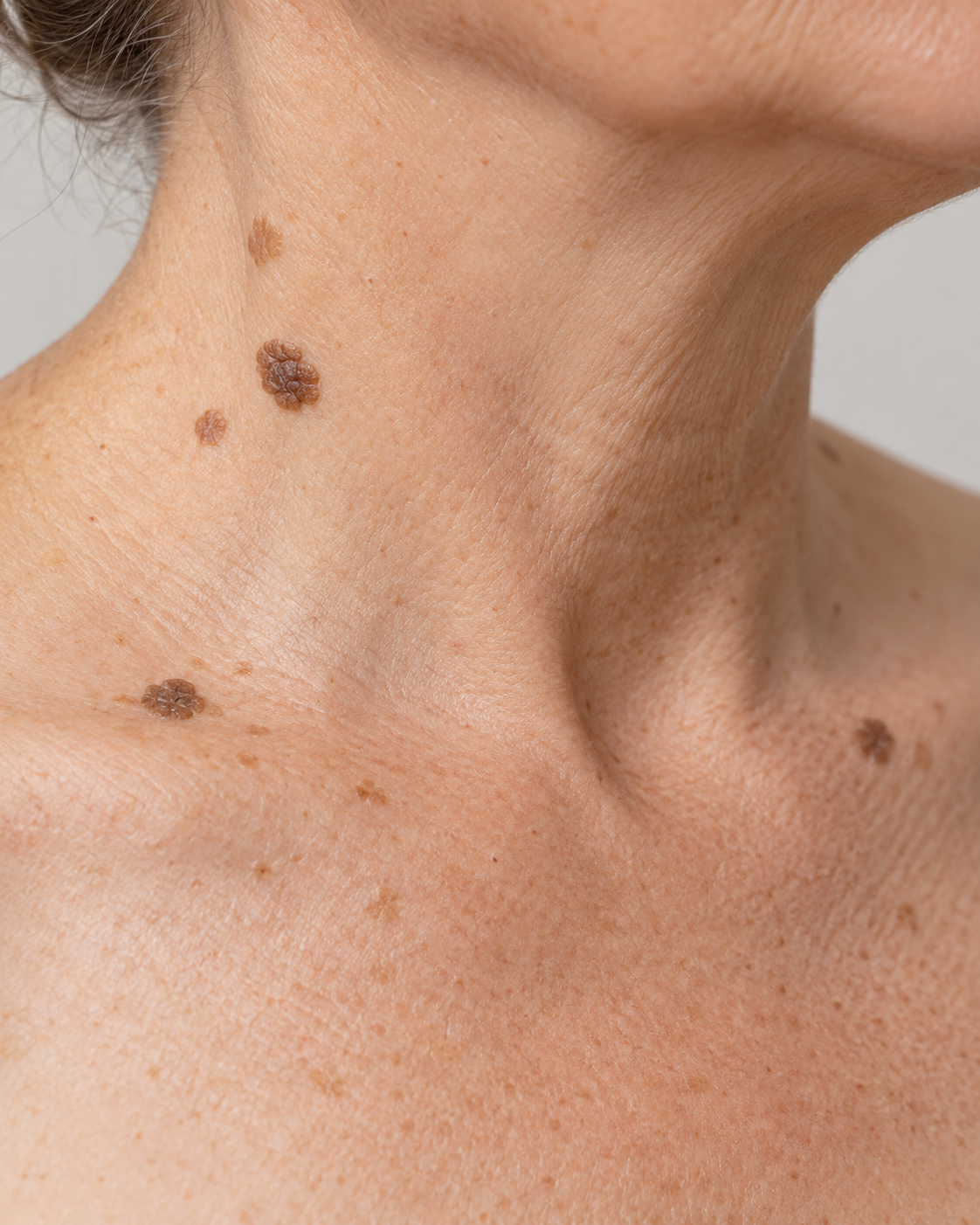
Seborrheic keratoses are common benign growths that become more frequent with age. They may look:
- Brown, tan or dark
- Raised or slightly elevated
- Rough, waxy or wart-like
- As though they are attached to the surface of the skin
They commonly appear on the face, neck, chest, back and other areas of the body.
A superficial seborrheic keratosis may be suitable for focused CO2 laser removal. However, some pigmented lesions can resemble a seborrheic keratosis, so the diagnosis should be confirmed before treatment.
Seborrheic keratoses should not be confused with flat freckles or sunspots. Flat pigmentation often requires a pigment-specific laser rather than an ablative CO2 laser.
5. Wart Removal in Bangkok
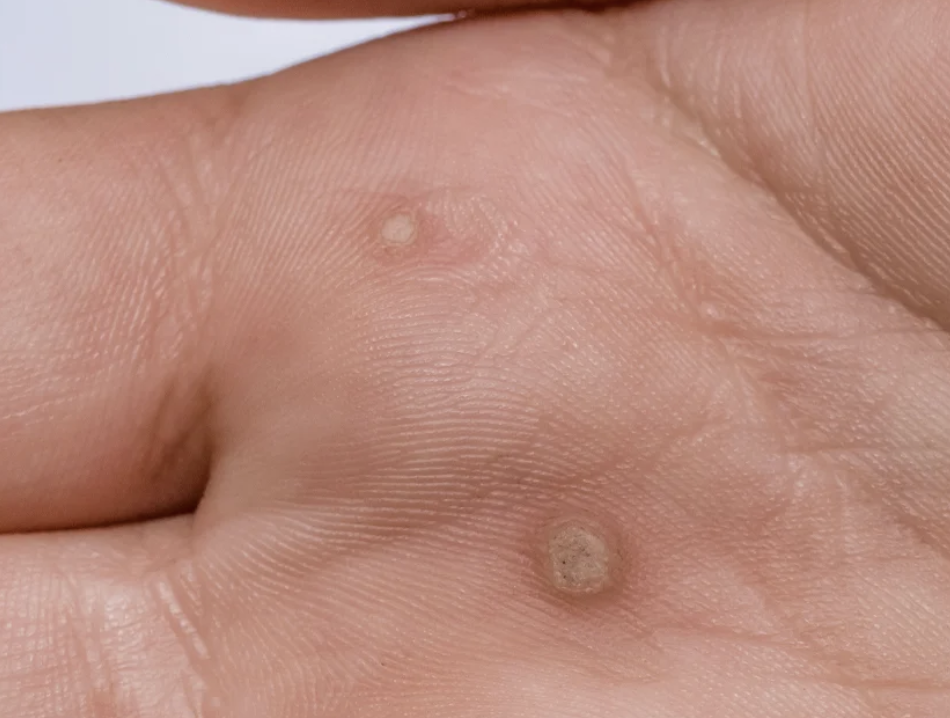
Warts are caused by the human papillomavirus, or HPV. This makes them different from moles, skin tags and seborrheic keratoses.
Warts may spread to nearby skin or return after treatment because removing the visible growth does not always eliminate all virus-affected tissue.
CO2 laser may be considered for certain warts, particularly when they are persistent or unsuitable for simpler treatment options. Some people require more than one treatment.
According to the American Academy of Dermatology, warts may require repeated treatment, and possible effects include temporary lightening or darkening of the treated skin and, less commonly, scarring.
Because warts are viral, BAC Clinic’s repeat-treatment policy for moles and beauty marks does not automatically apply to warts.
6. Milia Removal in Bangkok
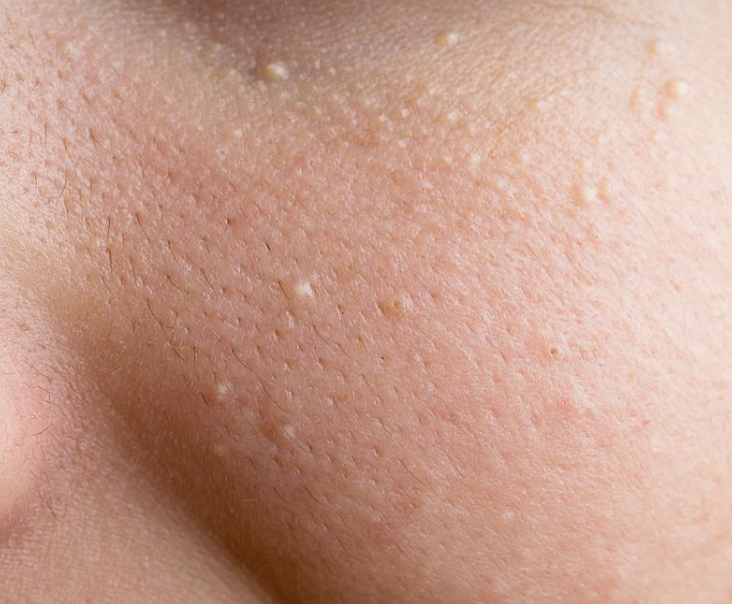
Milia are small, firm, white or cream-coloured bumps caused by trapped keratin beneath the surface of the skin. They frequently appear around the:
- Eyes
- Cheeks
- Forehead
- Nose
Milia are not the same as acne. They usually cannot be squeezed out like ordinary comedones, and attempting to puncture them at home may cause infection, bruising or scarring.
Depending on the number, location and depth of the bumps, the doctor may recommend extraction, focused CO2 laser or another suitable method.
Bumps around the eyes require particular care because milia, syringomas, sebaceous hyperplasia and other growths can appear similar. An examination is necessary before choosing a treatment.
7. Sebaceous Hyperplasia
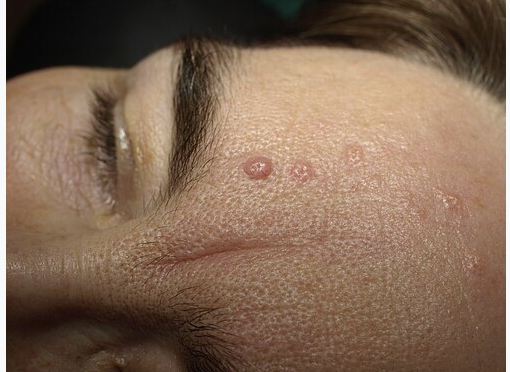
Sebaceous hyperplasia appears when sebaceous glands become enlarged. It often looks like a small, skin-coloured or yellowish bump with a slight central depression.
These bumps commonly develop on the forehead, cheeks and nose. Because they involve oil-gland structures beneath the surface, they may return after treatment.
Selected lesions may be treated with focused CO2 laser, but the doctor should first confirm that the bump is sebaceous hyperplasia and not another condition with a similar appearance.
Can CO2 Laser Treat Acne?
The phrase “CO2 laser for acne” can be misleading because it may refer to several different procedures.
Focused CO2 laser removal may be used for certain firm bumps that people informally call “stone acne” or “hard white acne,” such as milia. This is not the same as treating inflammatory acne, blackheads or ordinary clogged pores.
Fractional CO2 resurfacing is another procedure sometimes used for acne scars, but it is different from the point-by-point lesion removal described in this article.
If you are unsure whether a bump is acne, milia, sebaceous hyperplasia or another lesion, the doctor should examine it before treatment.
Which Lesions Should Not Be Lasered Immediately?
A suspicious mole or pigmented lesion should not be removed solely for cosmetic reasons without appropriate assessment.
Use the ABCDE guide to identify changes that need medical attention:
- A – Asymmetry: One half looks different from the other.
- B – Border: The edges are irregular, blurred, ragged or poorly defined.
- C – Colour: The lesion contains multiple colours or develops uneven pigmentation.
- D – Diameter: It is larger than approximately 6 millimetres, although suspicious lesions can be smaller.
- E – Evolving: It changes in size, shape, colour, height or symptoms.
A lesion should also be assessed carefully if it:
- Grows rapidly
- Bleeds without an obvious cause
- Becomes persistently itchy or painful
- Forms a sore that does not heal
- Looks noticeably different from your other moles
- Reappears with a different appearance after removal
The American Academy of Dermatology’s ABCDE guide recommends prompt medical assessment when a mole or pigmented spot shows these warning signs.
If the doctor considers a lesion suspicious, laser may not be recommended. Surgical removal or biopsy may be more appropriate because it allows tissue to be examined in a laboratory.
Why Professional Assessment Matters
At-home mole and skin tag removal products are widely advertised online, but they can create unnecessary risks.
The American Academy of Dermatology warns that attempting to remove a mole or skin tag at home may result in:
- Serious infection
- Uncontrolled bleeding
- Chemical burns
- Permanent scarring
- Incomplete removal
- Delay in diagnosing a potentially concerning lesion
Professional assessment is not merely about creating a better cosmetic result. It helps determine whether the growth is suitable for cosmetic removal at all. Read the AAD guidance on professional mole and skin tag removal.
How to Choose a CO2 Laser Clinic in Bangkok
1. Look for an in-person medical assessment
Photographs may help with initial communication, but they cannot replace examination under appropriate lighting.
The doctor should assess the lesion’s:
- Type
- Colour
- Surface
- Size
- Depth
- Location
- Changes over time
- Suitability for laser treatment
2. Ask who performs the treatment
CO2 laser is an ablative procedure that intentionally creates a controlled wound. It should be performed by a qualified medical professional who can evaluate the lesion and manage treatment depth.
At BAC Clinic, CO2 laser lesion removal is performed by a doctor.
3. Avoid absolute promises
No clinic should guarantee:
- No scar
- No pigmentation
- Permanent removal in every case
- No possibility of recurrence
- Identical healing for every patient
Even a small procedure can cause redness, temporary pigmentation, textural change, infection or scarring. The individual risk depends on the lesion, treatment depth, skin type, body location and aftercare.
A trustworthy clinic explains these possibilities before treatment instead of promising a perfect result.
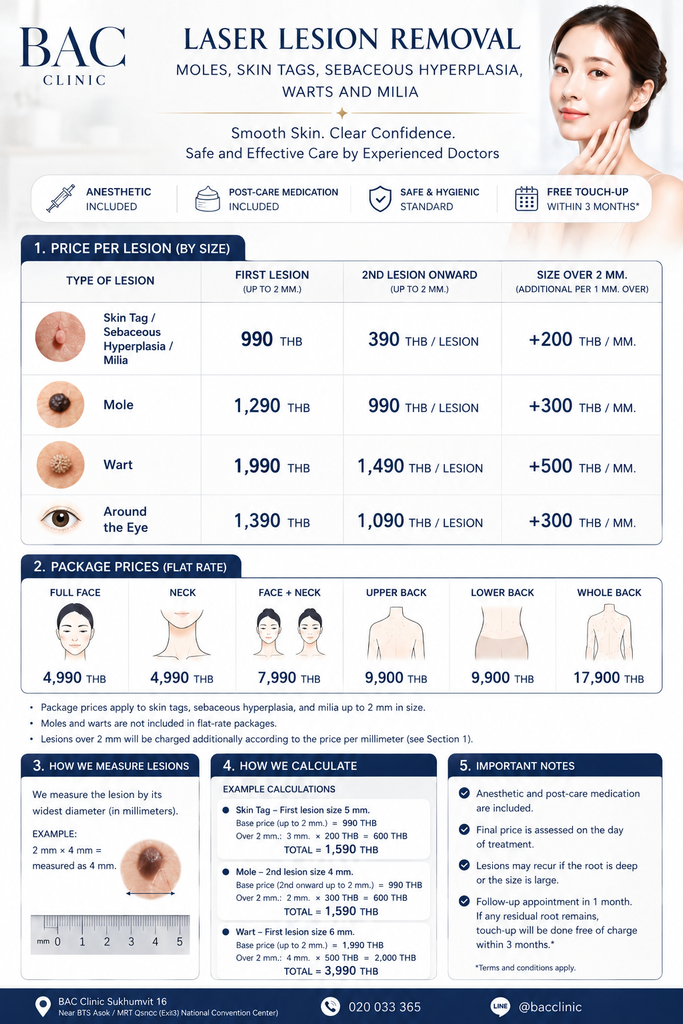
4. Ask how the price is calculated
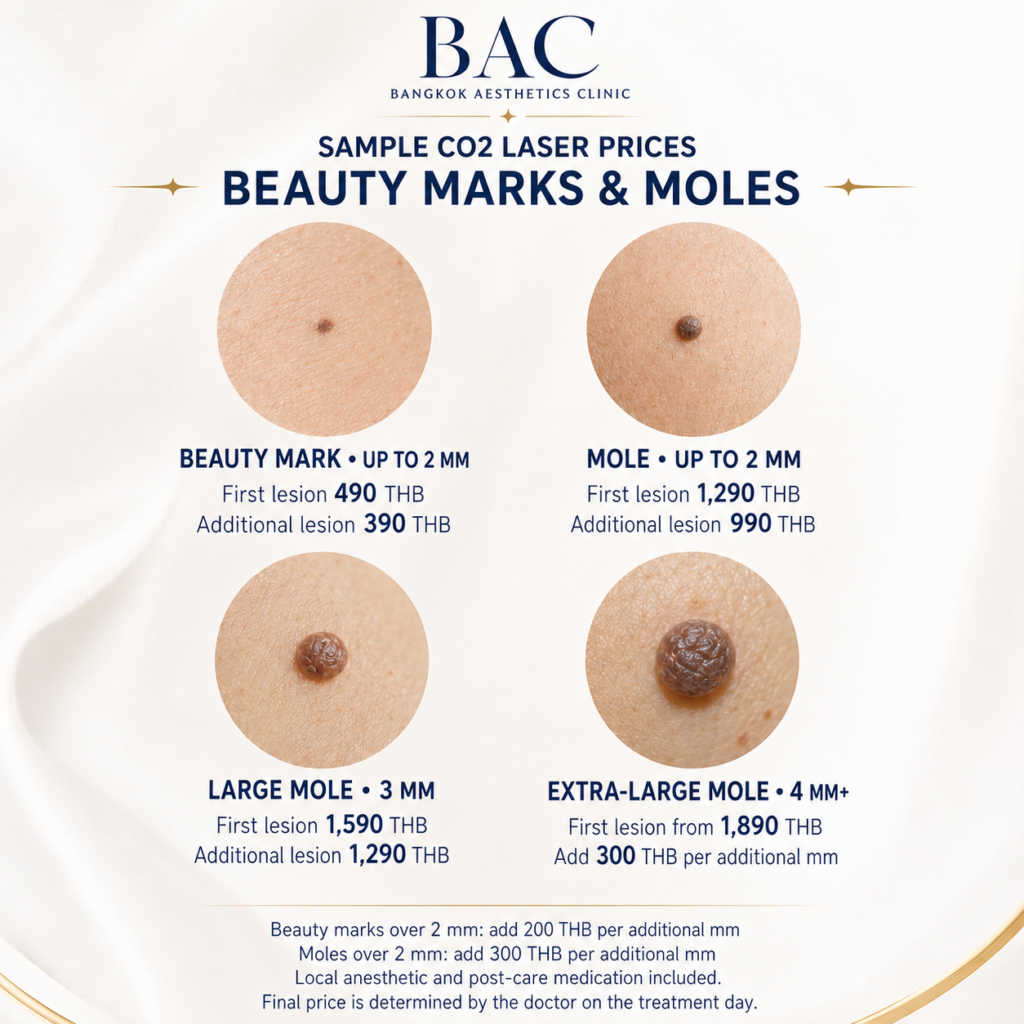
The price of CO2 laser removal may depend on:
- Type of lesion
- Number of spots
- Diameter
- Depth
- Body location
- Difficulty of treatment
- Whether medication or special wound-care supplies are required
The final plan and price should be confirmed after an in-person assessment.
5. Check the aftercare protocol
Proper aftercare can influence wound healing and the appearance of the treated area.
Before treatment, make sure you understand:
- How long the wound must remain dry
- Whether a dressing is required
- How often to change the dressing
- Which medication or ointment to apply
- When facial cleanser can be used
- When skincare and makeup can resume
- What activities should be avoided
- When to contact the clinic
6. Choose a clinic you can contact after treatment
Some lesions require follow-up assessment, particularly if they regrow or if the wound does not heal as expected.
For international patients, access to English-language post-treatment communication can be especially helpful.
Why International Patients Choose BAC Clinic
BAC Clinic is located in central Bangkok and provides aesthetic treatments for both Thai and international patients.
Doctor assessment before treatment
Each lesion is examined before removal. The doctor determines whether it appears suitable for CO2 laser or whether another form of evaluation would be more appropriate.
Individual treatment settings
The doctor selects the treatment depth and energy according to the lesion’s type, size and location. Small superficial spots are not automatically treated in the same way as larger or deeper growths.
Consultation and treatment on the same day
International visitors often have limited time in Bangkok. Consultation and treatment may be completed during the same appointment if the doctor considers the lesion suitable and there is sufficient treatment time.
English communication
The doctor can communicate in English, and English-language appointment support is available.
Clear aftercare
Patients receive wound-care instructions covering medication, dressings, cleansing, makeup, exercise and sun exposure.
Follow-up support
If a treated area does not heal normally or a lesion returns, patients may contact the clinic for further advice and assessment.
Convenient central Bangkok location
BAC Clinic is located on Sukhumvit 16, with access from:
- MRT Queen Sirikit National Convention Centre
- BTS Asok
- Sukhumvit Road
- Central Bangkok hotels and business districts
Parking is also available.
What Happens During Your Appointment?
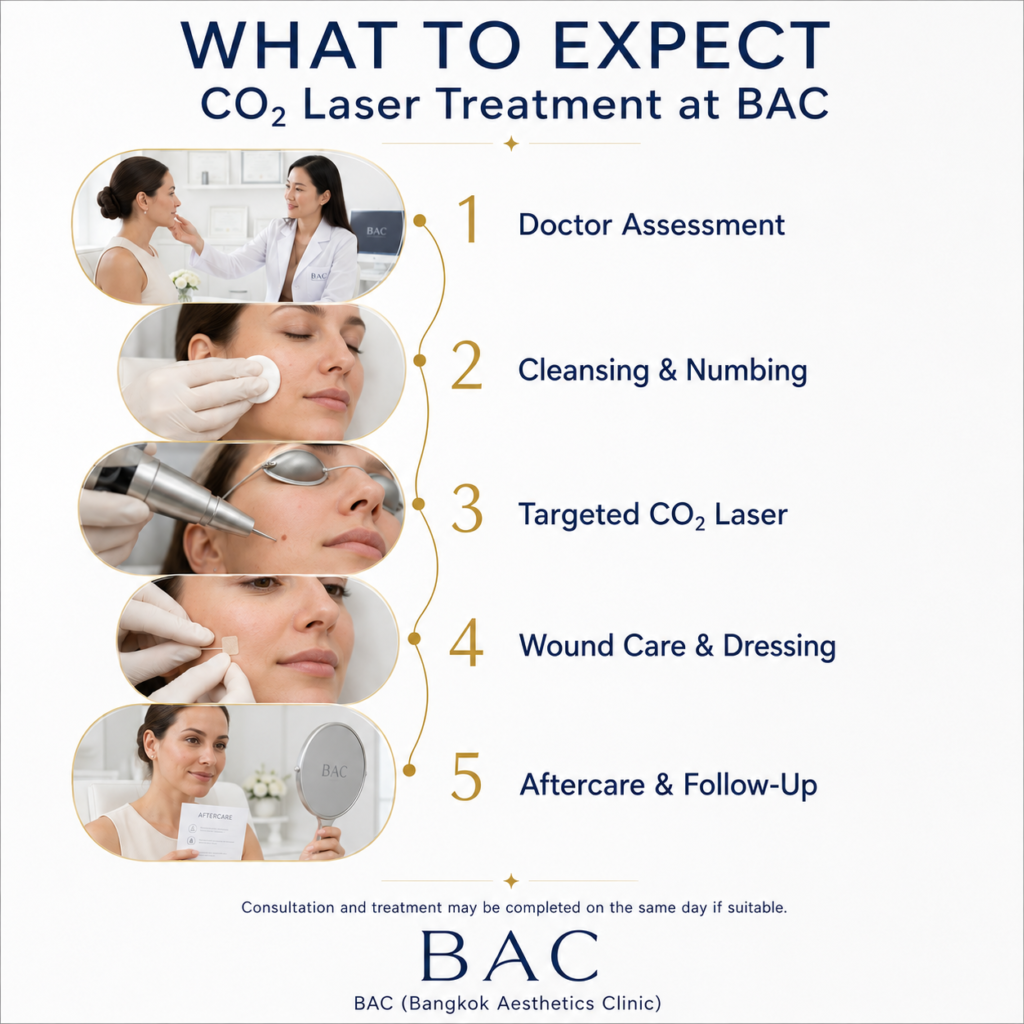
Step 1: Consultation and examination
The doctor examines the spots you would like removed. Each lesion is classified as accurately as possible before treatment.
You should tell the doctor if you have:
- A history of keloid or raised scars
- Poor wound healing
- Active skin infection
- Allergies to medication or dressings
- A bleeding disorder
- Prescription medication that affects bleeding
- Current or recent isotretinoin use
- Pregnancy or breastfeeding
- Previous treatment on the same lesion
- A lesion that has changed, bled or grown rapidly
Do not stop prescribed medication without consulting the prescribing doctor.
Step 2: Treatment recommendation and quotation
The doctor explains which lesions may be treated with CO2 laser and which should not.
The clinic will confirm the price based on the number, size, depth, type and location of the lesions before proceeding.
Step 3: Skin preparation and numbing
The treatment area is cleaned. An appropriate numbing method may be used depending on the size, location and number of lesions.
Step 4: CO2 laser removal
The doctor treats each suitable lesion individually. Treatment time varies according to the number and complexity of the spots.
Step 5: Dressing and aftercare
Medication or ointment is applied, and the wound may be covered with a dressing. You will receive instructions based on the size and depth of the treated area.
Does CO2 Laser Removal Hurt?
A numbing method is normally used when appropriate. During treatment, some patients feel warmth, brief stinging or a mild snapping sensation.
Discomfort varies according to:
- Treatment location
- Number of lesions
- Lesion depth
- Individual sensitivity
- Type of anaesthesia used
After treatment, the area may feel tender or mildly irritated for a short period.
Will CO2 Laser Leave a Scar?
Any procedure that creates a wound can potentially leave a mark.
Possible effects include:
- Temporary redness
- Temporary darkening
- Temporary lightening
- A small textural change
- A depressed mark
- A raised scar
- Infection-related scarring
The risk is influenced by treatment depth, lesion size, location, skin type, individual healing and aftercare.
Avoiding scab picking, keeping the wound clean as directed and protecting the healed skin from strong sun exposure can support recovery. However, no clinic can honestly guarantee completely scar-free removal.
BAC Clinic Aftercare Instructions
Aftercare may be adjusted by the doctor according to your wound. Follow the instructions provided during your appointment.
Small or superficial wounds
- Keep the wound dry for the first 3 days.
- After 3 days, the treated area may come into contact with clean water.
- After 7 days, facial cleanser or soap may be used.
Large or deep wounds
- Keep the wound dry for the first 7 days.
- After 7 days, the treated area may come into contact with clean water.
- After 10 days, facial cleanser or soap may be used.
Medication and dressings
- Apply Betadine or the ointment provided by the clinic 1–2 times daily, or as instructed by the doctor.
- Keep a small wound covered for approximately 3 days.
- Keep a large wound covered for approximately 5 days.
- Replace the dressing every day or immediately if it becomes wet, dirty or loose.
- Continue the medication according to the doctor’s instructions.
- Allow the scab to fall off naturally.
- Do not pick, peel, scratch or remove the scab.
If you need to clean your face while the wound must remain dry, use a clean cotton pad or soft cloth moistened with clean water or normal saline. Gently wipe around the area without touching the wound.
Avoid applying skincare products or makeup directly over the wound for at least 3–7 days, or until the wound has healed sufficiently.
The clinic may also advise you to avoid strenuous exercise, excessive sweating, direct sun exposure, alcohol and certain fermented or pickled foods for at least 7 days, depending on the wound.
Once the wound has healed fully and the scab has fallen off naturally, the doctor may recommend products to support the appearance of the remaining mark.
Advice for Travellers Visiting Thailand
Bangkok’s heat, humidity and strong sunlight can make wound care more challenging. If you are planning a beach holiday, swimming, diving or intense outdoor activities, consider scheduling CO2 laser removal after that portion of your trip.
You should avoid:
- Swimming while the wound must remain dry
- Direct sun exposure on the treated area
- Heavy exercise that causes excessive sweating
- Picking at the wound during travel
- Applying unfamiliar cosmetic products to the healing area
If you are flying shortly after treatment, discuss your travel schedule with the clinic. Travelling is often possible after a small procedure, but you must still be able to follow the wound-care instructions.
Repeat-Treatment Policy for Moles and Beauty Marks
If a mole or beauty mark reappears in the same location, you may return for a doctor’s assessment.
If the doctor considers repeat treatment appropriate and it is performed within 3 months of the original treatment date, BAC Clinic will waive the repeat procedure fee. A 300 THB equipment fee applies.
This policy applies only to moles and beauty marks. It does not include:
- Seborrheic keratoses
- Skin tags
- Warts
- Milia
- Sebaceous hyperplasia
- Other skin lesions
After the 3-month period, treatment charges will be based on the doctor’s assessment and the clinic’s current terms.
Frequently Asked Questions
Can I send photographs for an assessment?
Photographs may help the clinic understand the approximate number and location of the lesions. However, they cannot confirm the diagnosis, depth or suitability for laser treatment. The final assessment and price must be confirmed in person.
Can I have consultation and treatment on the same day?
Yes, when the doctor considers the lesion suitable and sufficient appointment time is available.
Can several spots be removed during one appointment?
In many cases, several lesions can be treated during the same appointment. The appropriate number depends on their type, size, location and the amount of wound care required afterward.
How long does the appointment take?
The duration depends on the number and complexity of the lesions and whether numbing time is required. The clinic can provide an approximate schedule after receiving basic information about the areas you would like treated.
How long does the wound take to heal?
Healing time depends on lesion size, depth, location and individual recovery. Small superficial wounds generally recover sooner than deeper wounds. Do not judge healing solely by whether the scab is still present, and never remove the scab manually.
When can I wear makeup?
Do not apply makeup directly over the wound for at least 3–7 days or until the wound has healed sufficiently. Follow the specific advice given by the doctor.
Can skin tags return?
The exact treated skin tag may not necessarily return, but new skin tags can develop in the same area, especially where there is repeated friction.
Can warts return after CO2 laser treatment?
Yes. Warts are caused by a virus and may return or appear in nearby skin. Some cases require repeated treatment.
Can a mole return?
A mole can reappear if pigment-producing cells remain deeper in the skin. Any recurrent or changing mole should be examined again.
Is CO2 laser suitable for every skin tone?
CO2 laser may be used in different skin tones, but the risk of post-inflammatory pigmentation must be considered. The doctor should adjust the treatment plan and provide appropriate aftercare based on the patient’s skin and lesion characteristics.
Is home mole or skin tag removal safe?
No. Cutting, burning, tying or applying corrosive products at home can cause infection, uncontrolled bleeding, burns, scarring and delayed diagnosis of an abnormal lesion.
Book a CO2 Laser Consultation in Bangkok
If you are looking for mole removal, skin tag removal, wart removal or milia removal in Bangkok, an in-person assessment is the safest place to begin.
At BAC Clinic, the doctor will examine each lesion, explain which spots may be suitable for CO2 laser, discuss expected healing and confirm the price before treatment.
Consultation and treatment may be arranged during the same visit when appropriate.
BAC– Bangkok Aesthetics Clinic
Sukhumvit 16, Bangkok, Thailand
Near MRT Queen Sirikit National Convention Centre and BTS Asok
Parking available
LINE: @bacclinic
Telephone +66 2 003 3365 WhatsApp (+66)960924442
Contact the clinic with the number and location of the spots you would like assessed, your preferred appointment date and your travel schedule in Bangkok.
This article provides general information and does not replace an in-person medical assessment. Treatment suitability, healing time, risks and results vary between individuals.